The Neolithic underground necropolis with 80 visitor slots per day. Book 2-3 months ahead for summer, 6 weeks for shoulder season. Visit mechanics and the daily lottery.
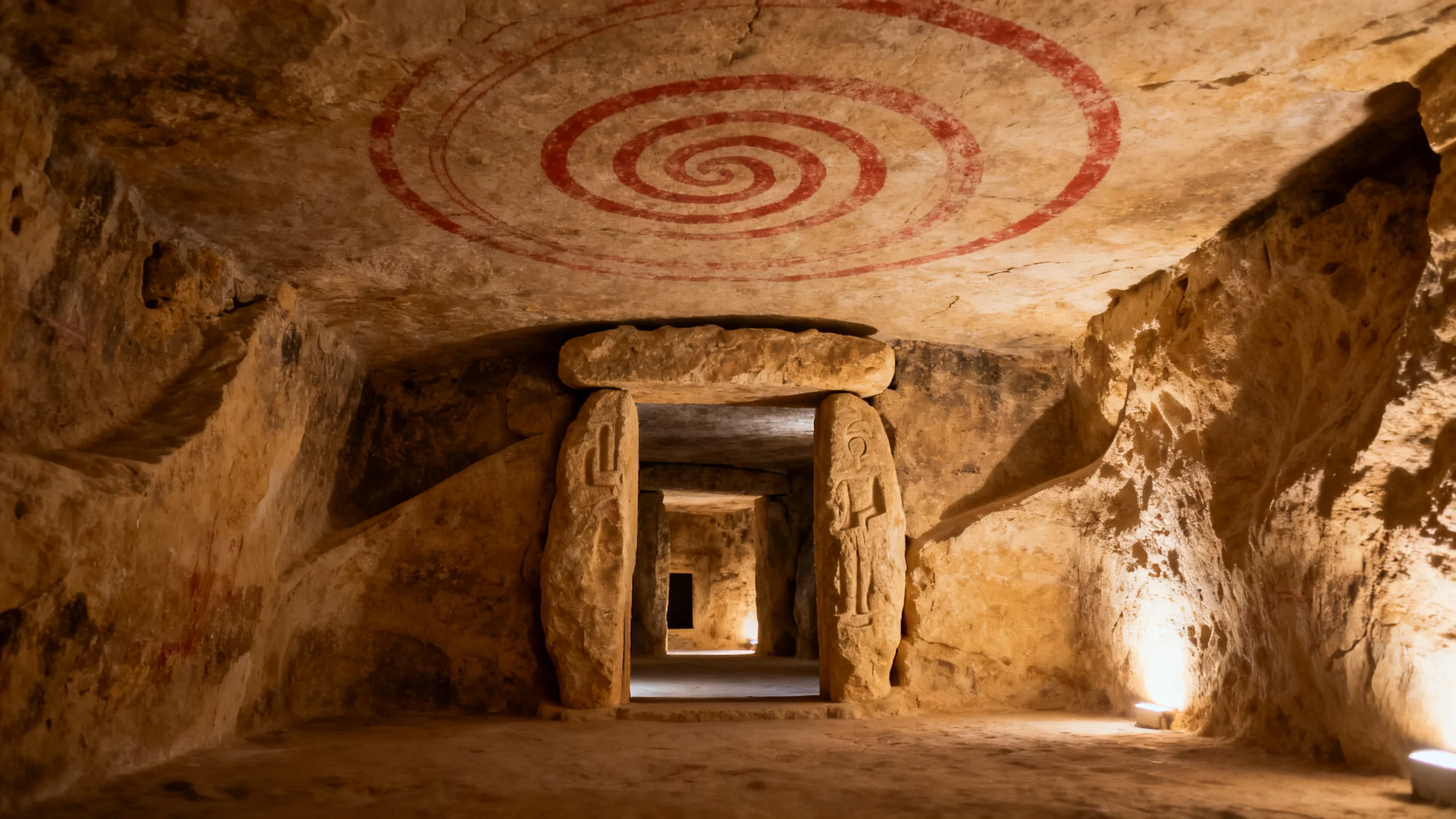
The Hypogeum of Hal Saflieni is the only Neolithic underground structure in the world. A three-level necropolis carved into the limestone in modern Paola, used between 3300 and 2500 BC. Painted ceilings (red ochre spirals), trilithon doorways cut out of solid rock to mimic the surface temples, and the burial remains of around 7,000 individuals. UNESCO-listed since 1980, restricted to 80 visitors per day to protect the limestone microclimate.
This is the strongest single archaeological experience available on Malta. The hard part is getting a ticket.
How the booking works
The Hypogeum sells tickets through Heritage Malta (the government agency that manages most archaeological sites). Tickets are released roughly 6 months in advance and disappear quickly.
Lead times (typical):
- July, August, September: book 2-3 months ahead. Often sold out 2 months before the visit date.
- April, May, June, October: book 6 to 8 weeks ahead.
- November to March: book 3 to 4 weeks ahead. Slots often available with less notice.
Book directly at heritagemalta.mt. The Heritage Malta site is the only legitimate seller for advance tickets; third-party resellers often inflate the price or use false availability.
Pricing:
- Adult: €40.
- Senior (60+): €35.
- Student (12-17 or with ID): €25.
- Child (6-11): €25.
- Under 6: not admitted (the visit is unsuitable for very young children).
Last-minute tickets:
- Heritage Malta operates a daily walk-up lottery at the Hypogeum visitor centre, releasing a small number of tickets each morning. Show up at 09:00; tickets are awarded by a simple draw.
- The lottery is unreliable: in summer, hundreds compete for a handful of tickets. In winter, a small queue may walk in without difficulty.
- Do not plan a trip around the lottery. Use it only as a backup if you missed the advance booking window.
The visit itself
The Hypogeum visit is 60 minutes, structured as:
- Visitor centre introduction (15 minutes): a film and display of casts and reproduction artefacts.
- Underground guided visit (45 minutes): one of the small group visitors with a guide, following a fixed route through the three levels. The guide controls the pace and the lighting (parts of the Hypogeum are lit only briefly to protect the limestone).
You walk the entire route. Audioguides are not used because the corridors are narrow and the acoustic environment is preserved.
Photography is not permitted anywhere inside the Hypogeum. Phones must be off (not silent, off). The conservation team is strict; ignored phone use will get you removed from the visit without refund.
Temperature: the underground is consistently 17-18°C. In summer the contrast with the 32°C surface is sharp; bring a light layer.
Footwear: closed shoes only (not sandals or flip-flops). The limestone steps are uneven.
What you actually see
The Hypogeum has three levels:
Upper level (the oldest, around 3300 BC): a series of irregular chambers carved out of the limestone, the earliest excavated burial layer. Reuses elements of natural caves.
Middle level (the most decorated, around 3000-2800 BC): the chambers with the painted ceilings (red ochre spirals on the curved limestone surfaces) and the carved trilithon doorways. The Oracle Chamber has the famous acoustic effect: a low male voice resonates and amplifies in a way that travels through the entire complex. The Sleeping Lady figurine (now in the National Museum of Archaeology in Valletta) was found in this level.
Lower level (around 2800-2500 BC): the deepest chambers, partly used for child and adolescent burials. The “Holy of Holies” chamber at the lowest point is the most carefully carved interior.
If you cannot get a ticket
The alternative is the National Museum of Archaeology in Valletta, which displays the original Hypogeum artefacts (the Sleeping Lady, the carved figurines, ceramic ware) and includes a film about the site. €6, allow 90 minutes. Worth doing whether or not you have a Hypogeum ticket.
The on-site Hypogeum visitor centre runs a small free display about the architecture and the conservation. You can walk in without a Hypogeum ticket; the display takes 20 minutes. Useful as a partial substitute if the visit itself is sold out.
Combine with
The Hypogeum is in Paola, 600 metres from the Tarxien Temples. The walk between the two takes 8 minutes. Combine on the same morning or afternoon:
- Morning: Hypogeum (1 hour) + Tarxien Temples (90 minutes).
- Lunch in Paola: limited but workable; small Maltese kitchens around the parish square.
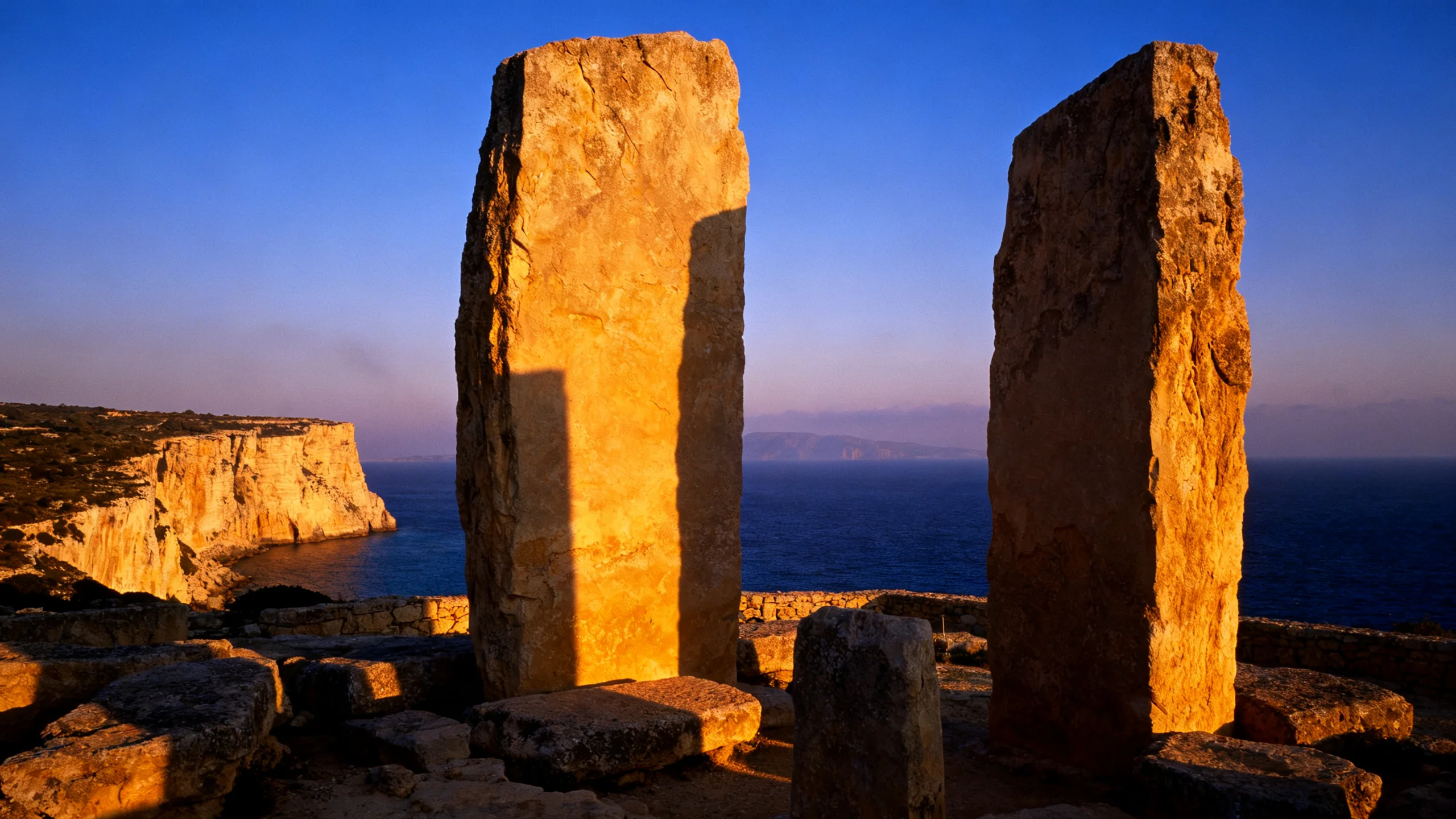
See the megalithic temples south activity for the cliff-top temple pair (Hagar Qim and Mnajdra) that complements the Hypogeum visit.
What to skip
- Third-party Hypogeum tours sold by Sliema or Bugibba operators at €60-80 per person. The actual ticket is €40 direct from Heritage Malta; the third parties add a small group tour to the surface (which you do not need).
- “Hypogeum experience” alternatives marketed as substitutes. They are not. There is no equivalent to the Hypogeum on Malta; the only legitimate alternative is the National Museum of Archaeology.
Why the visit matters
The Hypogeum is unique in the world. There are larger Neolithic sites elsewhere (the Mesopotamian and Egyptian comparisons), and there are other painted-ceiling prehistoric sites (the cave art of Lascaux, Altamira). But the combination of underground architectural carving, painted ceilings, and the temple-mimicking trilithon doorways exists only at Hal Saflieni. The site was carved between 3300 and 2500 BC, which makes the upper level roughly contemporary with the earliest Egyptian step pyramids and the lower level finished about 200 years before the Great Pyramid of Giza was built.
For travellers serious about prehistoric archaeology, this is one of the strongest single visits available anywhere.
Related reading
- Megalithic Malta: the long context piece.
- Hagar Qim and Mnajdra: the surface temples 30 minutes south.
- Ggantija on Gozo: the oldest of the seven.
- Temples nobody visits: the four lesser sites that complete the picture.
- South Malta region: the region the Hypogeum sits in.