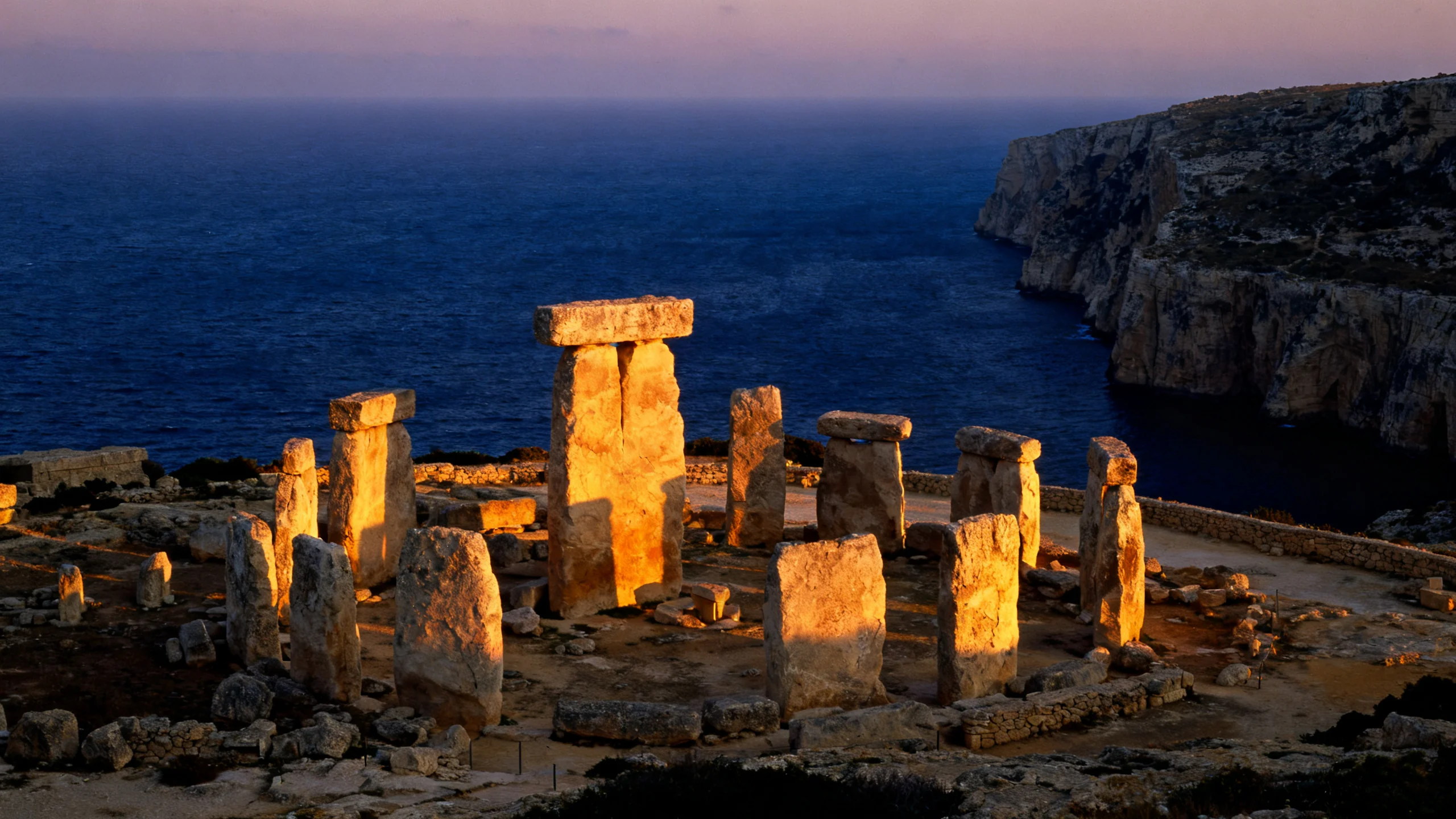
South Malta is the half of the country that looks the way Malta looked sixty years ago. The package hotels never reached this coast. The land between the airport and the southern cliffs is still partly agricultural, the villages are still anchored on their parish churches, and the most important sites on the southern peninsula are about five thousand years older than anything in Valletta. This is where Maltese prehistory sits, where the working fishing fleet still moors, and where the cliffs drop two hundred metres into the Mediterranean without a single hotel on top of them. The honest case for spending time in the south is that the rest of Malta is built; this part is partly not. The honest case against is that nothing here is a half-day visit. Each thing wants its own slow morning or afternoon.
There is no single town that organises the south the way Valletta organises the north or Mdina organises the centre. Marsaxlokk is the picturesque village, but it is a fishing port, not a base. Marsaskala has more accommodation, but it is residential and quiet. The temples and Dingli Cliffs sit out in the agricultural landscape. The south is best understood as a string of named places along the coast, with the road running between them.
This is also the side of Malta where prehistory dominates the cultural story. The Maltese temple period (roughly 3800–2500 BC) predates the Egyptian pyramids by close to a thousand years and produced more standing megalithic architecture than anywhere else in the Mediterranean. Six of the seven UNESCO temple sites in Malta are within forty minutes of each other in the south or near it. None of these places explain themselves without some context, so the order in which you visit matters.
The megalithic temples: how to actually visit them
There is one cluster on the southern cliffs (Hagar Qim and Mnajdra, paired) and two more inland (Tarxien Temples, and the Hypogeum of Hal Saflieni, which sits underground in Paola).
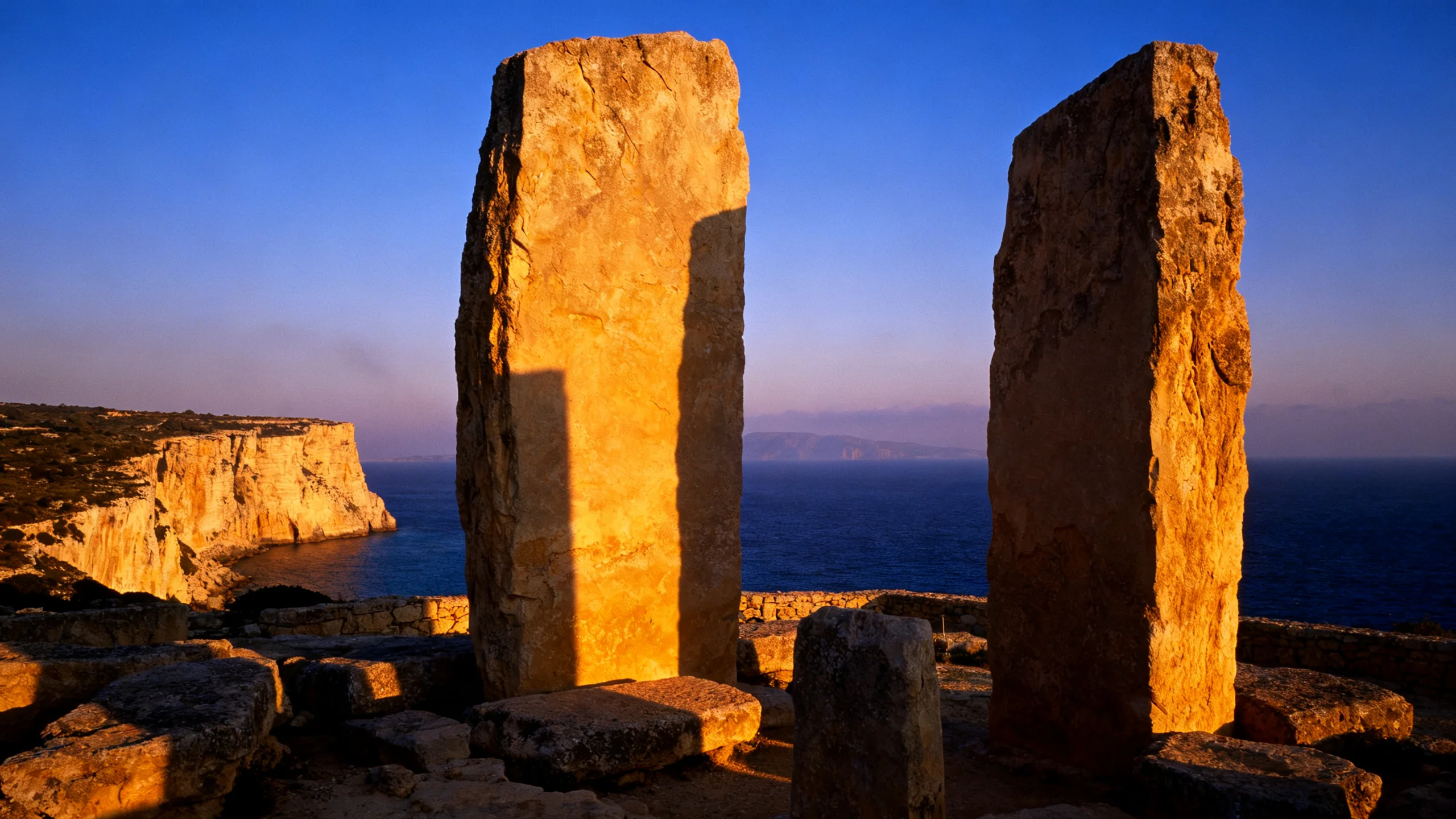
Hagar Qim and Mnajdra stand on the cliffs above Wied iz-Zurrieq, about 30 minutes from Valletta by car. They are paired because they are 500 m apart and share an admission ticket (€10, audioguide included). Both sit under modern protective tents, which the conservation team installed in 2009 to slow the limestone erosion. The tents are visually intrusive, and most photographs you see online predate them, but the alternative was the stones dissolving in another fifty years.
Visit Mnajdra first if you have time for both. It is the more complete and more atmospheric of the pair, set fifty metres below Hagar Qim with a clear sightline to the sea. Mnajdra’s south temple is astronomically aligned to the equinox sunrise; on 20 March and 22 September the first sunrays cross the doorway and strike specific stones in the apse. The Heritage Malta team runs guided sunrise sessions on those dates, bookable a few weeks ahead.
Allow ninety minutes for both temples together, plus thirty for the small visitor centre at Hagar Qim with its film and reproduction artefacts (the originals are at the National Museum of Archaeology in Valletta). The walk between the two takes ten minutes downhill, twelve back.
Tarxien Temples are inside the modern town of Paola, surrounded by 1960s apartment blocks. The contrast is jarring but the site itself is exceptional: a tightly clustered four-temple complex with carved decoration (spirals, animals, the famous lower half of the “Fat Lady” colossal statue) that is more visually rich than Hagar Qim. €6, audioguide included, allow ninety minutes. Pair with the Hypogeum if you can get tickets.
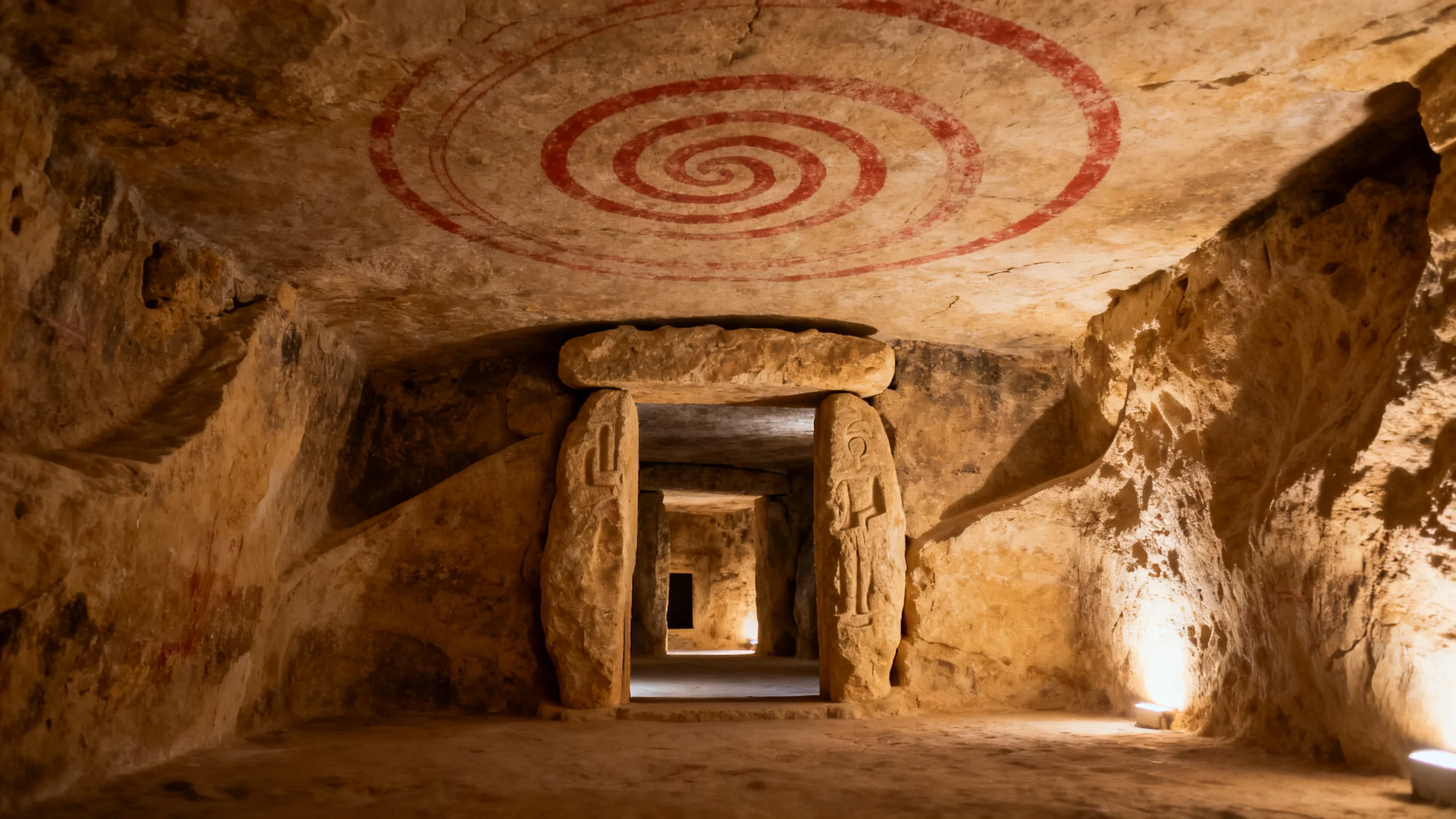
The Hypogeum of Hal Saflieni is the difficult one. An underground necropolis carved into the rock between 3300 and 2500 BC, with painted chambers, carved trilithon entrances, and the only Maltese prehistoric site that is genuinely underground. Tickets are capped at 80 visitors per day to protect the limestone microclimate, which means you must book months in advance: 2 to 3 months for July–September, 6 to 8 weeks for shoulder season, 3 to 4 weeks for winter. Book at heritagemalta.mt. The visit is 60 minutes, €40. There is no walk-up option except the small daily last-minute lottery, which is not worth planning around.
If you cannot get a Hypogeum ticket, the Hal Saflieni story is told through casts, photographs, and a partial-reconstruction film at the National Museum of Archaeology in Valletta. Worth thirty minutes either as a substitute or as a preparation if you do get tickets.
Marsaxlokk and the working harbour
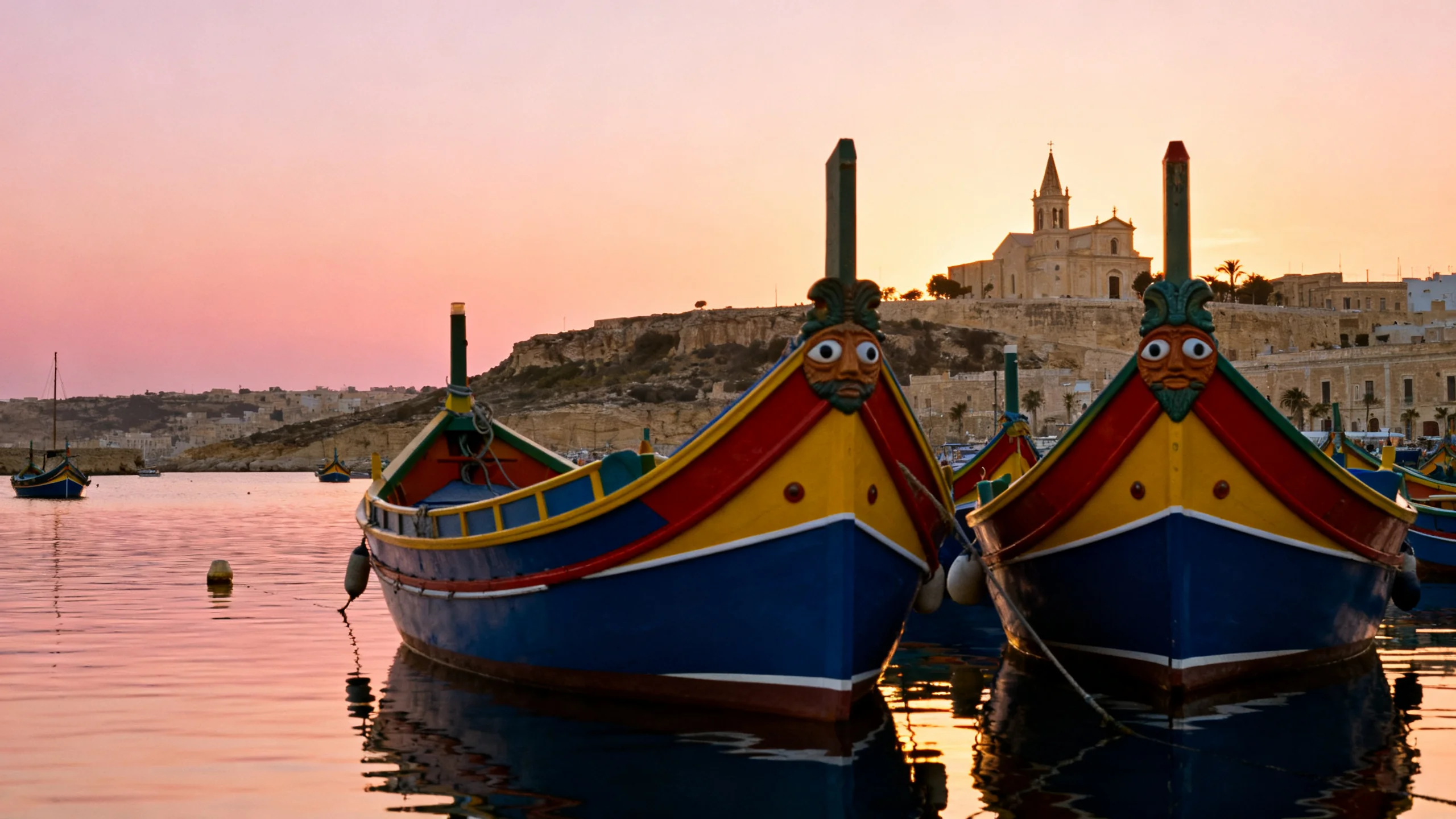
Marsaxlokk is the fishing village in the south-east corner of the island, distinguished by the painted luzzu boats in the harbour. The luzzu carries the painted Phoenician eye on its prow, which is the oldest design tradition still in active use in the country.
Sunday morning is the famous market. Two markets actually: the daily fresh-fish market on the inner quay (open every morning until about noon), and the larger Sunday tourist market that runs along the seafront promenade with stalls of preserved foods, lace, kitchenware, fake football shirts and ceramics. The fish market is the real one; arrive by 09:30 to see the haul on ice and the negotiations happening between restaurateurs and fishermen.
Lunch in Marsaxlokk is the trap. The seafood restaurants on the quay range from genuinely good to tourist-grade. The reliably good ones include Tartarun (set menus, book ahead) and Ir-Rizzu (more casual, on the quay). The seafront walk-ins with menus in five languages photographed at the door are the ones to skip.
The weekday version of Marsaxlokk is the better visit if you want to understand the fishing economy. Arrive on a Tuesday morning instead, see the boats actually go out and come back, talk to whoever is mending nets on the quay. The Sunday version is the photogenic one; the Tuesday version is the real one.
Blue Grotto and the cliffs
The Blue Grotto at Wied iz-Zurrieq is a sea cave system below the cliffs, accessible by small boat from the tiny inlet. The cave entrance is photogenic; the cave interior is short (the boat goes in, the operator points out three or four named features, the boat comes out). The whole trip is around 25 minutes, €8 per person, boats leave when full (15 minutes’ wait at most in summer).
The boat is not the main reason to go. The cliff-edge viewpoint above the inlet, where the tour buses stop to take photos of the arch from above, is the better photograph. Five minutes from the road, free, weather-independent. Combine with the Hagar Qim / Mnajdra visit (the temples sit on the cliffs 800 m west).
If you skip the boat, the Blue Grotto cliffs are also one of the few good shore-dive sites in the country. Local dive schools run boat-and-shore trips from Wied iz-Zurrieq, with bottom visibility of 25 to 35 m in summer.
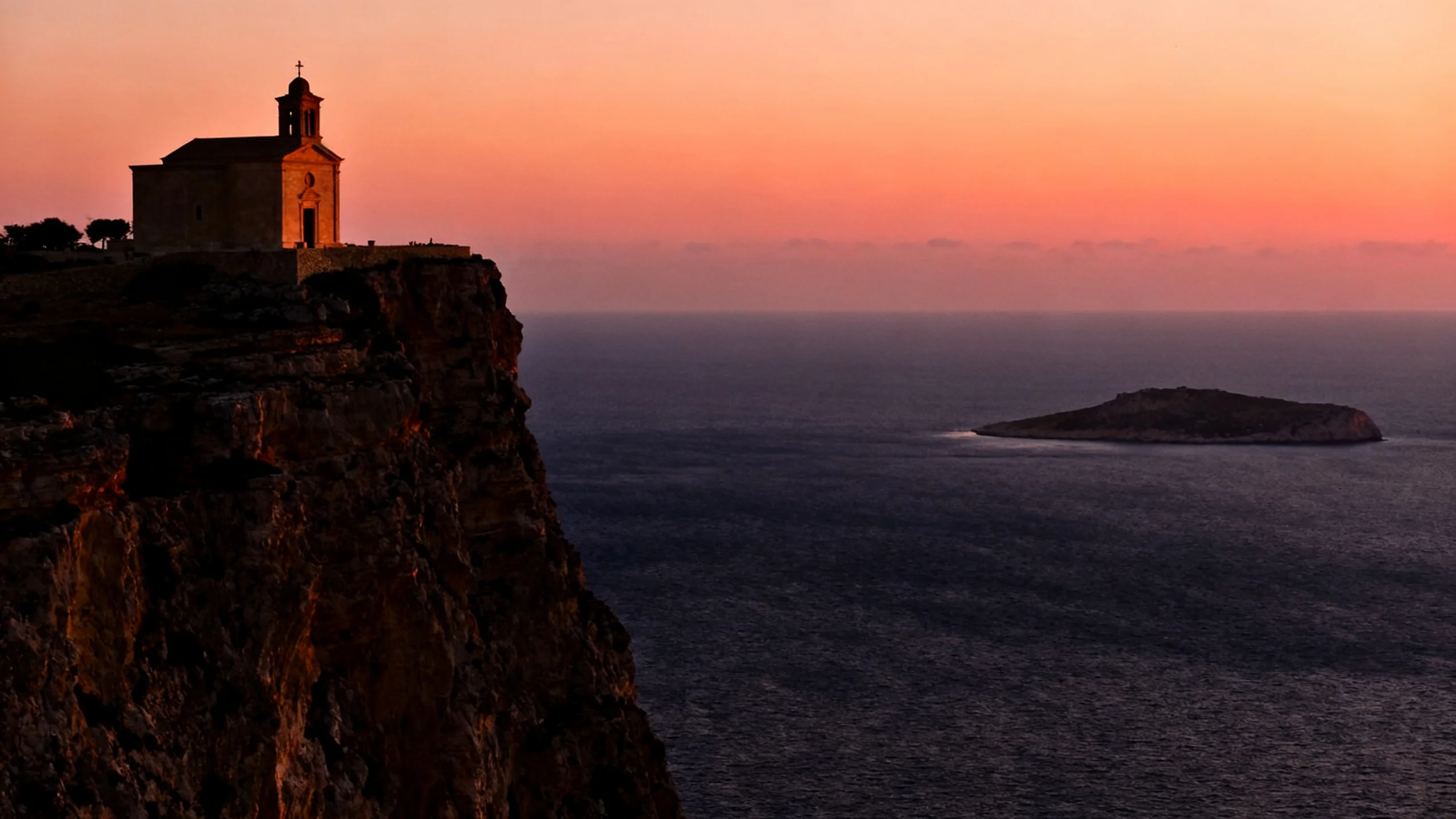
Dingli Cliffs are the other south-coast cliff destination, an hour west by car. The cliffs run for about 5 km along the south-west coast, with a sheer drop of around 250 metres at their highest point. This is the highest point on the Maltese coast and the place to time for sunset: park near Dingli village, walk along the cliff-top road, and pick a flat stone fifteen minutes before the sun touches the horizon. Bring a fleece even in summer; the wind on the cliff is consistent. The chapel of St Mary Magdalene at the cliff edge is the photographic anchor.
What to skip
Most of the half-day south tours that try to cover Marsaxlokk + Blue Grotto + Hagar Qim + Tarxien in five hours. Each of these wants its own quiet visit; combined into one bus tour, you spend more time getting on and off coaches than looking at anything. If you have only one day in the south, prioritise Hagar Qim + Mnajdra in the morning, lunch in Marsaxlokk, and Dingli Cliffs at sunset.
Popeye Village is in the north, not the south; if a southern tour itinerary includes it, the route is wrong for the day.
Birzebbuga town beach has the freight port immediately behind it. Pleasant enough for locals, not for a beach day. Use Mellieha Bay in the north instead.
Getting in and out
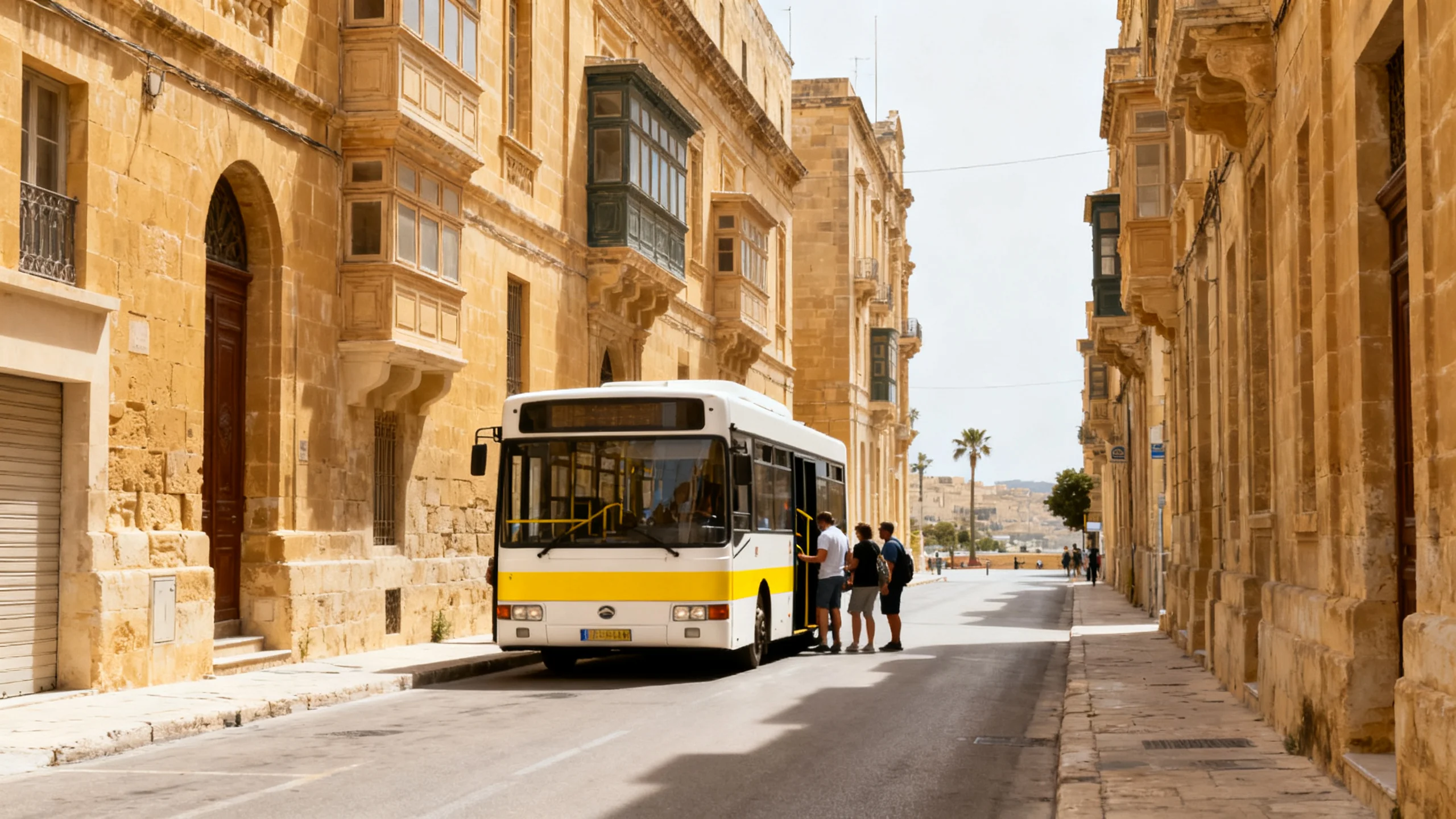
Most of the south is reachable by bus from Valletta, but transfers between southern sites by bus require waiting. A rental car saves hours.
- Valletta to Marsaxlokk: bus #81 or #85, around 45 minutes, €2.50. Drive: 25 minutes off-peak.
- Valletta to Hagar Qim / Mnajdra: bus #74 from Valletta, around 60 minutes. Drive: 30 minutes.
- Valletta to Dingli Cliffs: bus #52 to Dingli village, then a 1.5 km walk to the cliff edge. Drive: 35 minutes plus parking near the chapel.
- Within the south: there is no continuous bus along the coast between Marsaxlokk and Dingli. Hire a car or accept that some segments require two buses with a transfer in Valletta.
Where to sleep
Limited stock, which is part of the appeal.
Marsaskala has the most accommodation in the south, mostly small guesthouses and self-catering apartments along the seafront, €70 to €130 a night. Quieter than Sliema, walkable, with a few local restaurants that are not on the cruise-ship circuit.
Marsaxlokk itself has a handful of guesthouses inside the village, mostly small-scale. €90 to €150 a night. Pleasant for a night or two but limited dining options outside the seafront restaurants.
Inland villages (Zurrieq, Qrendi, Siggiewi) offer the rural farmhouse experience that Gozo is better known for, often at €100 to €160 a night for a 2-bedroom stone house with a small pool. This is the slow-travel choice if you have a car.
Detailed picks on the where-to-stay page for this region.
How long to stay
A single day is enough for one cliff-top temple visit, lunch in Marsaxlokk, and a Dingli Cliffs sunset (in that order, daytripping from Valletta or Sliema).
Two nights based in Marsaskala or a Zurrieq farmhouse give you one unhurried day for the temples, a Marsaxlokk Sunday morning if your dates line up, an evening at Dingli, and a half-day at Tarxien plus the Hypogeum if you have tickets.
Beyond two nights here, you are either committed to slow travel or you are using the south as a quiet base for the rest of Malta. Both are reasonable.
The honest paragraph
The south of Malta is the region most international travellers skip and most archaeology-minded ones come back for. The temples are not visually spectacular in the modern sense (no soaring arches, no painted ceilings), but they predate the Egyptian pyramids and the Mesopotamian ziggurats by close to a thousand years, and standing in front of a doorway built in 3600 BC by a society that had not yet figured out metal tools is a different kind of experience. The cliffs are the cliffs. Marsaxlokk Sunday is the postcard; Marsaxlokk Tuesday is the truth. Skip if you came for beaches and nightlife; come for two nights if you came for any of the rest.