The paired UNESCO temples on the southern cliffs, older than the Egyptian pyramids. Visit mechanics, the equinox sunrise alignment, and how long to actually spend.
Hagar Qim and Mnajdra are the paired megalithic temples on the southern cliffs of Malta, built between 3600 and 3200 BC. They are 500 metres apart, share a combined admission ticket, and together form the strongest single archaeological visit on the main island. Both are UNESCO-listed since 1980. The temples predate the Egyptian pyramids by close to a thousand years.
This is what to know about visiting them.
What you actually see
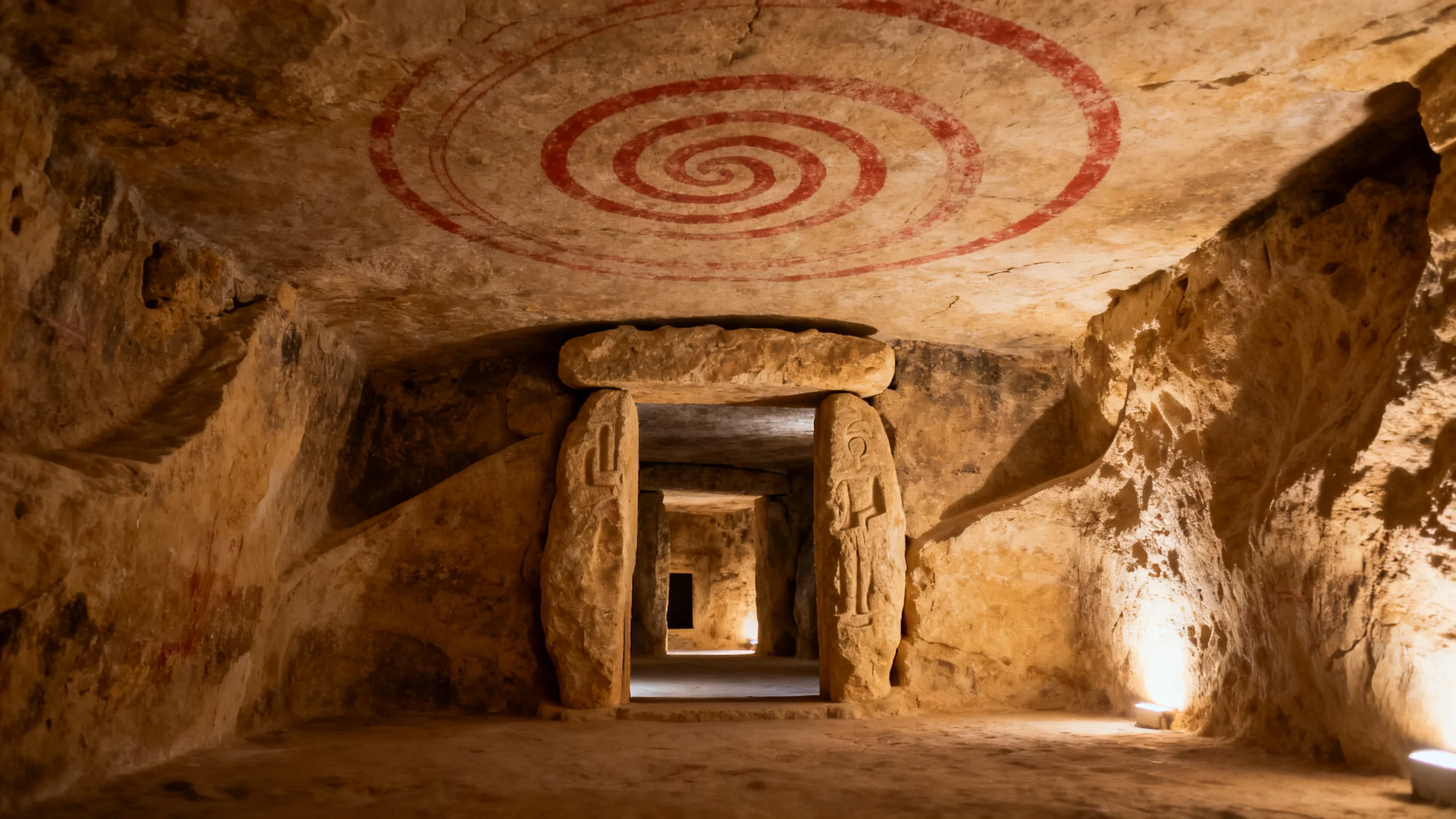
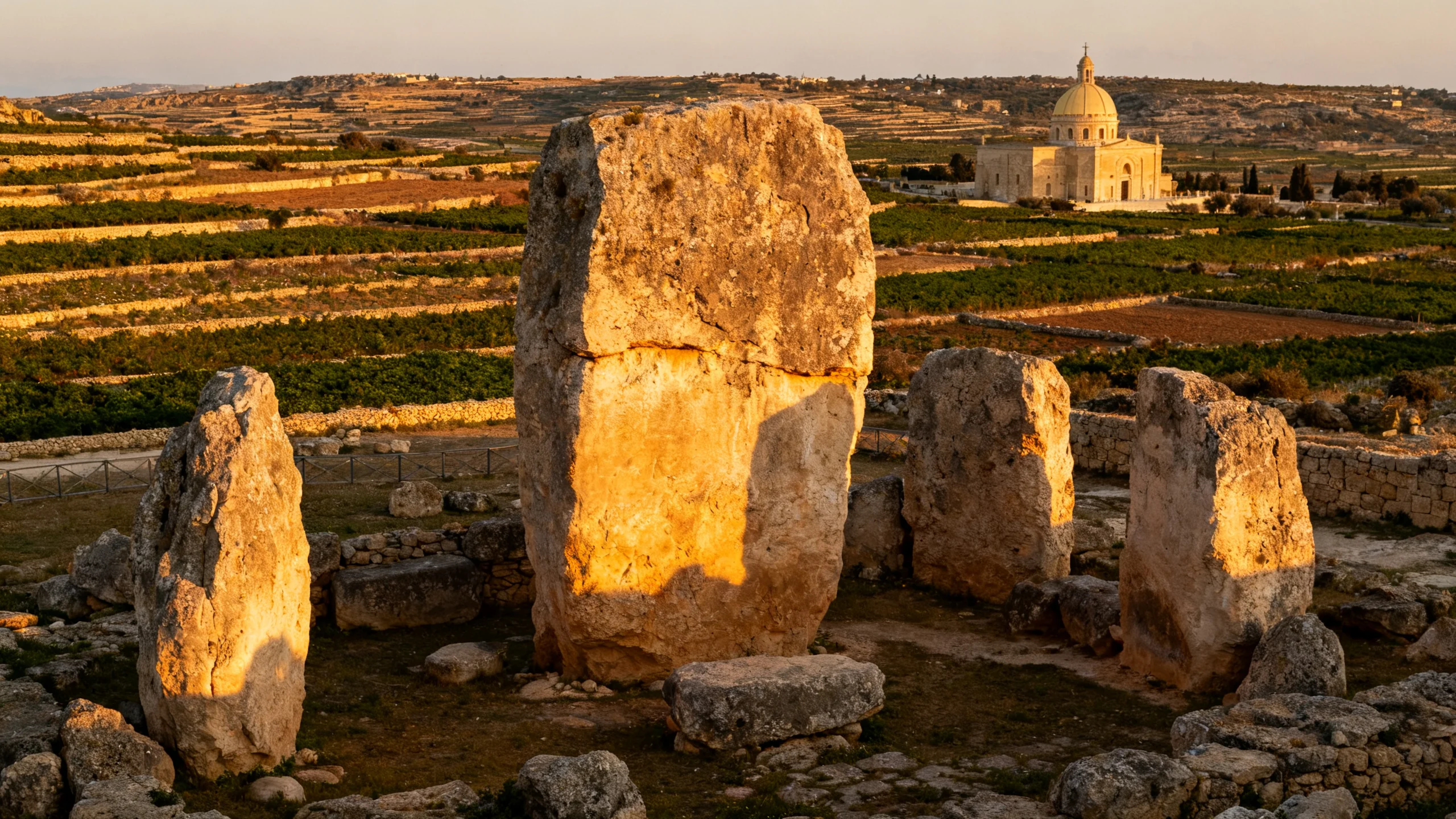
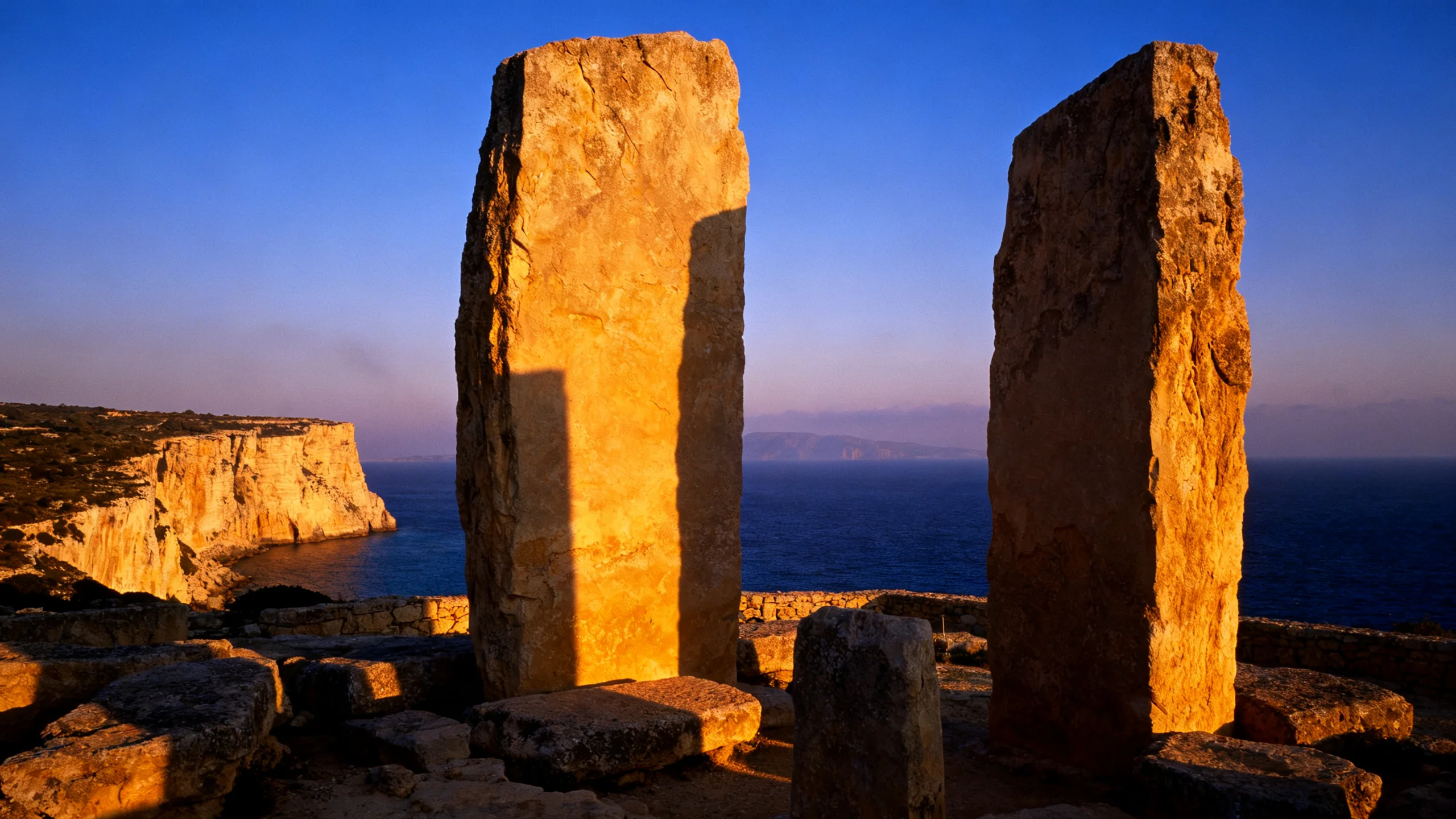
Hagar Qim is the upper temple, set above Wied iz-Zurrieq with a sea view to the south. The largest single stone in the complex weighs around 57 tonnes. The temple plan is a trefoil layout with smaller apses arranged around a central corridor; the entry trilithon (two uprights and a lintel) is one of the most photographed prehistoric doorways anywhere.
Mnajdra sits 500 metres below Hagar Qim, accessed by a paved sloping path. Three temples in a tight complex, with the south temple astronomically aligned to the equinox sunrise. On 20 March and 22 September, the first sunrays cross the doorway and strike specific stones in the apse.
Both temples are covered by modern protective tents (installed in 2009 to slow the limestone erosion). The tents are visually intrusive; photographs you see online from before 2009 do not have them. Conservation reasoning is sound, but the visual impact takes some adjustment.
The visitor centre at Hagar Qim has a 15-minute introductory film, reproduction artefacts (the originals are at the National Museum of Archaeology in Valletta), and an air-conditioned café.
Booking
Tickets: €10 combined for both temples + visitor centre, audioguide included. €6 for under 18 with valid ID.
No advance booking required for general admission. The site is rarely sold out except on equinox days.
The equinox sunrise visit is the exception. Heritage Malta runs guided sunrise sessions on 20 March and 22 September, with limited capacity. Book 4-6 weeks ahead for these. Tickets are €25-35 including the early-morning access and a guide.
Book a general south Malta temples tour on GetYourGuide. Bundled tours often include the Blue Grotto cliff stop and Marsaxlokk lunch.
When to go
Best times:
- Early morning (09:00-10:30): smallest crowds, coolest temperature, best light for the limestone.
- Late afternoon (16:00-17:30): warm sunset light on the southern stones, smaller crowds than midday.
Worst times:
- Midday in July-August: the limestone reflects strongly, the temperature on the open cliff approaches 35°C, and the day-trip coaches all arrive between 11:00 and 13:00.
Best season: spring (March-May) and autumn (September-November) for the best light and temperature. Equinox visits in March or September are the strongest specific occasions.
How to actually visit (the order)
- Visitor centre at Hagar Qim for the introductory film (15 minutes).
- Hagar Qim temple (45 minutes). Walk the perimeter, note the carved decoration on the niches and the famous “Venus of Malta” findspot.
- Walk down to Mnajdra (10 minutes, paved sloping path, mostly downhill). The path passes through Mediterranean garrigue scrub with thyme and capers.
- Mnajdra temple complex (45 minutes). The three temples within a single enclosing wall; the south temple has the equinox alignment.
- Walk back up (12 minutes, the same path uphill).
Total: 2 to 2.5 hours including the visitor centre. Add 30 minutes if you want to spend more time at the Mnajdra south temple alignment.
Combine with
The classic south Malta day:
- Morning: Hagar Qim and Mnajdra (2.5 hours).
- Late morning: drive 10 minutes to Wied iz-Zurrieq for the Blue Grotto cliff view and optional boat trip (€8, 25 minutes).
- Lunch: Marsaxlokk (15 minutes’ drive). Tartarun or Ir-Rizzu.
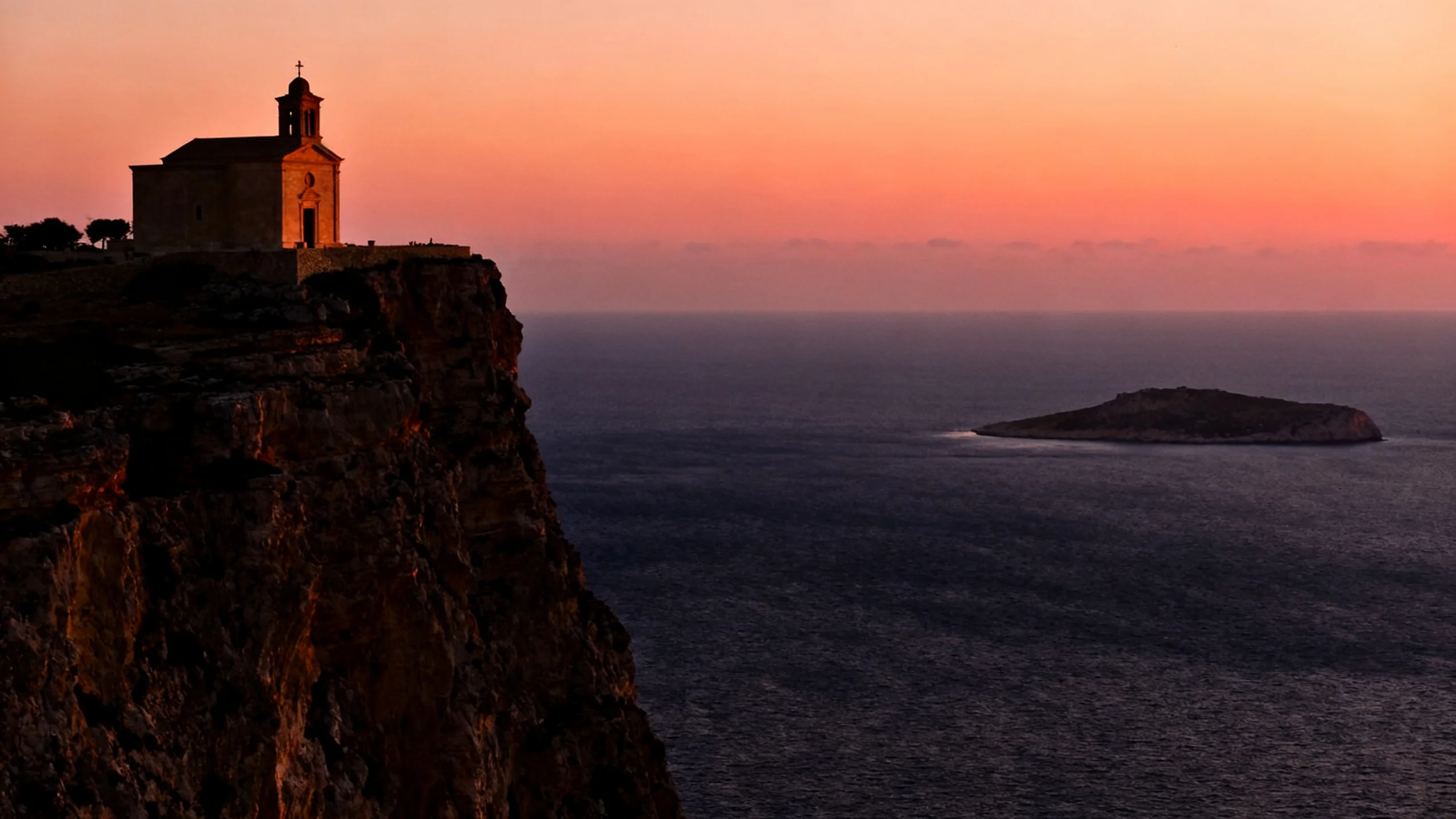
- Afternoon: Dingli Cliffs at sunset (25 minutes’ drive). Time it 30 minutes before sunset.
This full day works as a single car trip from any Valletta, Sliema or Mellieha base.
For the broader south region context, see the South Malta regional hub.
What to skip
- Hagar Qim Dungeon (no such thing exists, but tour-bus pitches occasionally invent it). The real Hagar Qim is a temple, not a dungeon.
- The “Hagar Qim experience VR” gimmicks sold by some operators. The site itself is the experience.
- Bundled tours that combine 4+ southern sites in one day (Hagar Qim + Tarxien + Hypogeum + Marsaxlokk + Blue Grotto + Dingli). Each site wants its own quiet visit; the bundled tours produce a rushed version of all of them.
Getting there
- From Valletta: bus #74 from Valletta City Gate, around 60 minutes, €2.50. Stops at the temple visitor centre.
- Driving: 30 minutes from Valletta, 40 from Sliema, 50 from Mellieha. Free car park at the visitor centre.
- From Marsaxlokk: bus #74 in the opposite direction, 25 minutes. Drive 15 minutes.
Accessibility
Hagar Qim is accessed by a flat paved path from the visitor centre (5 minutes). The temple interior is on a wooden walkway, wheelchair-accessible with assistance.
Mnajdra requires the 200-metre sloping path down (and back up). Wheelchairs can usually manage it with help, but the temple interior has uneven limestone slabs and the walkway is narrower than at Hagar Qim.
The visitor centre, café and toilets are fully accessible.
Why these temples matter
These structures were built by a population that had no metalwork and no writing system, using stone tools and rope-pulley engineering, almost a thousand years before the Egyptian pyramids and three centuries before the construction of Stonehenge in its earliest phase. The sustained sophistication of the architecture (the carved decoration, the precise astronomical alignments, the consistent temple plan repeated across multiple sites) is one of the strongest pieces of evidence we have for complex prehistoric societies in the central Mediterranean.
For a longer discussion of the Maltese temple culture, see the megalithic Malta discover piece.
Related reading
- Megalithic Malta: the long context piece.
- Ggantija temples: the oldest of the seven.
- Hypogeum Hal Saflieni: the contemporary necropolis.
- Temples nobody visits: the four lesser sites.
- South Malta region: the region the cliff-top temples sit in.
- Dingli Cliffs sunset: the natural same-day end-of-day pairing.