The honest list of things to do in this region is short. The seafront promenade walk is the main draw, the Valletta ferry crossing is the second, Spinola Bay is the third, and Paceville is the cautionary tale. None of these are full-day visits. A day in Sliema is realistically four hours of walking, eating and ferry-hopping, with the rest of the time spent on the beach platform or the apartment terrace.
The seafront promenade walk
The 3 km promenade from Tigne Point in Sliema to Spinola Bay in St Julian’s is the most underrated piece of public infrastructure in Malta. It uses the surviving pre-development limestone foreshore, with the urban strip set back behind it. Walk it in either direction; the natural starting point is Tigne Point because the walk improves as you go.
Tigne Point at the northern tip of the Sliema peninsula is a 2000s redevelopment around the old Tigne Battery fort. Modern but with the original limestone walls intact. The small public square at the tip has the best view back across to Valletta. Five minutes here.
The Sliema seafront between Tigne and the ferry dock is the residential mile: apartment blocks behind, low limestone shelf in front, occasional pre-development buildings (the Carmelite Sisters’ chapel halfway along is the visual anchor). The locals’ morning swim spots are along here; the small ladder-into-the-water access points cut into the rock are 50 to 100 years old.
The Carmelite Sisters’ chapel on Tower Road is the small Edwardian church often missed by walkers. Free, open mornings, ten minutes inside.
Past the Sliema Strand Wharf (the ferry dock), the promenade narrows briefly through the small bay at Balluta and the parish church of Our Lady of Mount Carmel sits on the corner. The Balluta Buildings, an Art Nouveau apartment block opposite the church, are the only major Art Nouveau structure in Malta.
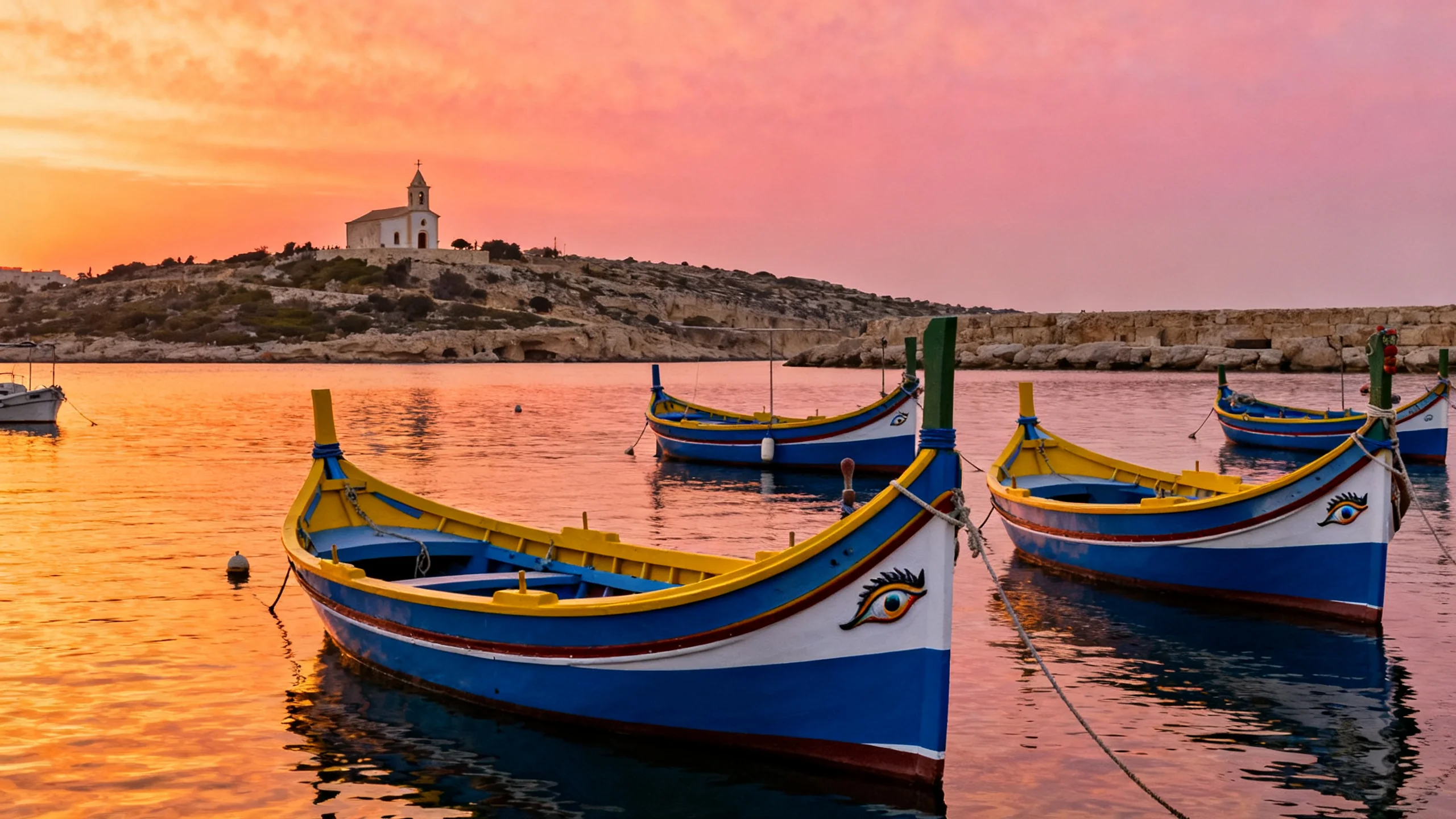
Spinola Bay in St Julian’s is where the walk peaks. The small horseshoe harbour, the painted luzzu boats, the restaurants curving around the bay. The Love sculpture at the head of the bay (a Robert Indiana-style LOVE in red letters) is a heavily Instagrammed photo spot. Stop here, eat, turn around, walk back if you want, or keep going to Portomaso marina at the far end.
Portomaso marina is the high-end yacht harbour, dominated by the Hilton tower. The marina-edge restaurants are correct and expensive. Pleasant 15-minute stroll if you are passing; not worth the bus ride otherwise.
The Valletta ferry crossing
The Sliema-Valletta ferry is a 5-minute crossing that costs €1.50 each way. It is also a small experience in itself: leave the open boat deck for the lower seating, climb back up for the approach into Marsamxett harbour, and you get the same view of the Valletta bastions that the cruise tour boats charge €35 to show you.
Do this in both directions in one day. Crossing in is the photograph of the Valletta skyline. Crossing back is the photograph of the Sliema seafront with the Tigne tower behind it. The ferries are old (1980s vintage) and creak; this is part of the experience.
Swimming spots
The Sliema “beaches” are limestone rock platforms, not sand. The most usable spots:
- Exiles Bay (Triq il-Knisja), the small sheltered swimming spot near the Carmelite chapel, with concrete steps into deeper water. Locals use it for morning swims year-round.
- Tigne Point platforms at the tip of the peninsula, broader rock platforms with sea-access ladders.
- Surfside Sliema at Fond Ghadir, a small concrete-and-rock platform with kiosks behind. Family-friendly for the gradient.
For a sand beach you need to leave the region. Mellieha Bay in the north is 30 minutes by car; Riviera Beach (Ghajn Tuffieha) is 45 minutes.
What about Paceville
Paceville is the nightlife strip at the northern end of St Julian’s. From around 22:00 to 03:00 it concentrates Malta’s club, drink-deal and stag-party scene. There is nothing wrong with going if that is the night you want; there is something wrong with booking a hotel within audible distance of it without knowing what you are booking. The two go separately:
- Daytime Paceville is empty, with morning-after debris being cleaned up. Nothing to do.
- Evening Paceville (after 22:00) is loud, sticky, mostly under 25, almost entirely British and Italian.
If you are travelling with kids, with elderly parents, or as a couple looking for a quiet break, route around Paceville entirely. If you are travelling with a group of 20-somethings for a stag weekend, this is what you came for.
Skip
- The Bay Street Complex in St Julian’s, a mid-2000s shopping mall on the Paceville strip. Identical to any mall in Europe, with the bonus of being directly above an active nightclub.
- Most of the chain restaurants along Bisazza Street in Sliema. T.G.I. Fridays, Hard Rock, the Maltese mid-market chain clones. Eat at Ta’ Kris, Capo Crudo, Tarragon, or any of the small Maltese kitchens a block back from the seafront instead.
- The Maltese folklore evening shows at the larger hotels. Folklore-as-floor-show, not the real festas (those are on a public calendar in the inland villages; see the Mdina, Rabat & the centre hub).
Half-day cultural excursions from Sliema
The strength of Sliema as a base is not its own attractions but its proximity to the rest of Malta. From the Strand Wharf you can be in Valletta in 5 minutes, in Mdina in 50 minutes (bus #202 direct), or in Mellieha in 70 minutes (bus #X1). Treat your hotel as the bedroom and the rest of the country as the day’s program.