Sliema and St Julian's are where most of Malta's package-hotel beds sit, where the cruise-ship architecture clusters, and where almost every first-time visitor ends up if they let a generic search engine pick their accommodation. The honest take is that this is not the Malta most travellers come for. It is modern, mid-rise, lined with international restaurants, and short on the limestone character that draws people to the country in the first place. That said, it is the most walkable, English-speaking, supermarket-served corner of Malta, and a ferry ride from Valletta. As a practical base for a short trip, it works. As the place you came to see, it does not.
If you draw a line from Valletta northeast along the coast, you cross a creek and immediately find yourself in Sliema. Five kilometres further on you are in St Julian’s, and another kilometre past that you reach Paceville. These three neighbourhoods run into each other along an almost continuous seafront and share one identity: this is the part of Malta that built itself for the post-1990s tourist economy rather than the part the tourist economy came to see.
The local nickname is “the modern coast”, and the description is accurate. Sliema was a quiet seaside village until the 1960s. The British navy left, the package hotels arrived, and the village turned itself into a mid-rise residential and commercial strip with very little of its original limestone street fabric still visible. St Julian’s followed, then Paceville beside it. The result is the densest concentration of hotels, apartments, supermarkets and chain restaurants anywhere in the country, packed into about 6 km² of coast.
This is useful information. If you are coming to Malta for the temples, the limestone, the silence of Mdina, or Gozo, you should not sleep here. If you are arriving on a 22:00 flight, leaving at 06:00 on Saturday, and you want a 7-Eleven open at midnight, you should.
What is worth seeing
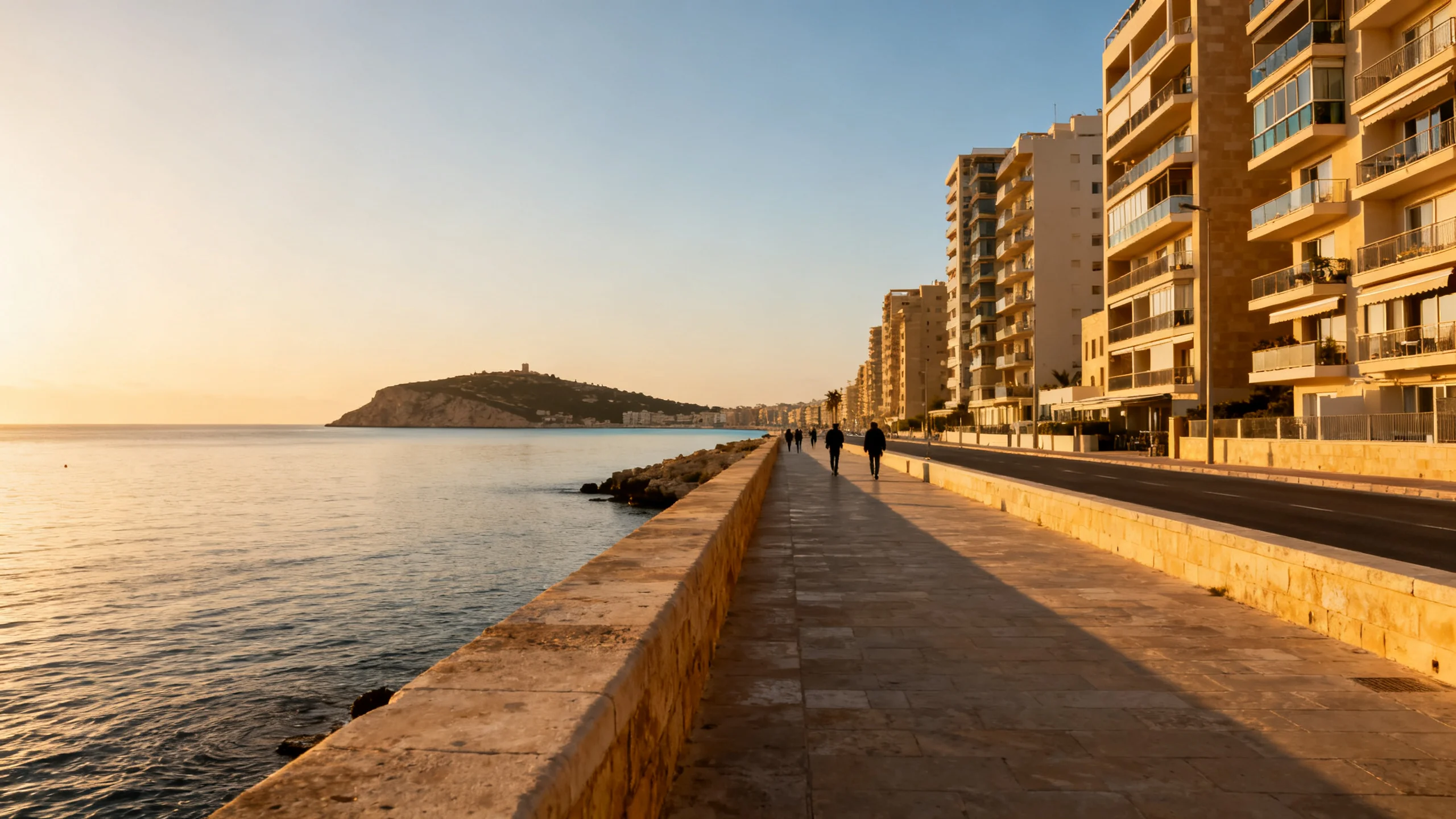
The seafront promenade from Tigne Point in Sliema to Spinola Bay in St Julian’s runs along about 3 km of coast and is the genuinely good thing about this region. It uses what is left of the pre-development limestone foreshore. Cut into the rock are small Roman-era and later salt pans and bathing pools (the Sliema “rock baths”), still used by locals for morning swims. Walk it at first light, around 06:30, and you will see what the coast looked like before the apartment blocks behind you arrived.
Spinola Bay is the small horseshoe harbour at the heart of St Julian’s. The painted luzzu fishing boats still moor there alongside the speedboats, and the restaurants line the curve. Locals eat at one or two of them (Zest, Tarragon further around the corner in San Ġwann), tourists eat at the rest. The Love sculpture at the head of the bay (a Robert Indiana-style “LOVE” in red letters) is a heavily Instagrammed spot. Worth a glance, not a stop.
The Carmelite Sisters’ chapel on Tower Road in Sliema is small, easy to miss, and the most pleasant pause on the seafront walk. Free, open most days.
Portomaso marina in St Julian’s is the high-end yacht harbour, with the Hilton tower above it. Worth a stroll if you find yourself nearby, not worth the bus ride otherwise. The seafood restaurants here are correct and expensive.
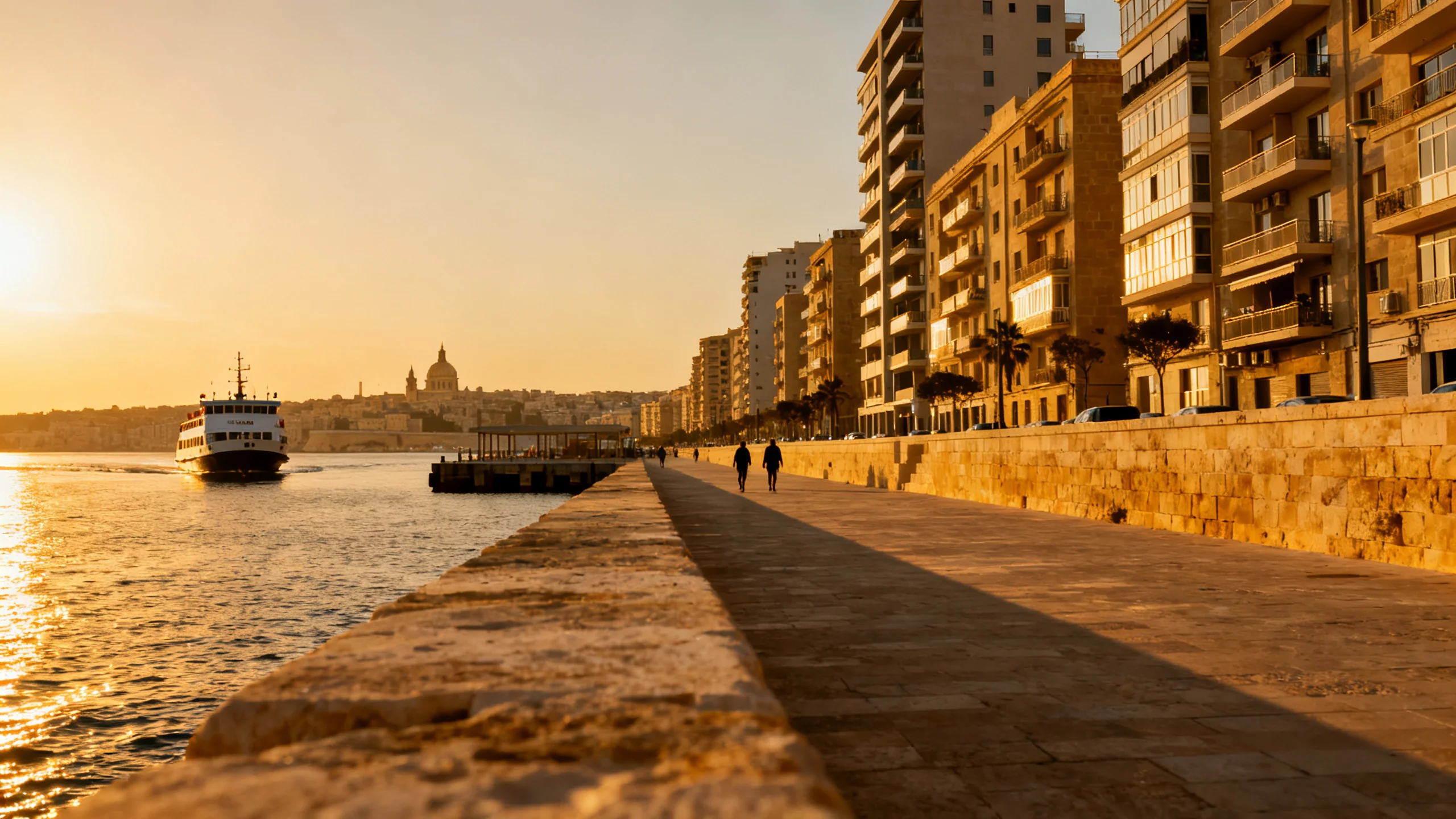
The Sliema-to-Valletta ferry is the most underused asset in this region. It leaves from Strand Wharf every 30 minutes, crosses to Valletta in five minutes, and costs €1.50 one way (€2.80 return). Compared to driving (20 minutes if the traffic gods are kind, 45 if not) or the bus #13 (slow and crowded), it is the obvious choice. If you sleep in Sliema and visit Valletta daily, this becomes part of your routine.
What to skip
Paceville is the nightlife strip, immediately north of St Julian’s. It is densely packed with clubs, drink-deal pubs, fast-food outlets and the kind of stag-and-hen-party tourism that Malta’s tourism board would rather you not focus on. From around 22:00 to 03:00 it is loud, sticky, mostly under 25, and almost entirely British and Italian. There is nothing wrong with going if that is the night you want, but read the room before booking a hotel within earshot of it. Anything labelled “Paceville-adjacent” means “noisy until 04:00”.
The chain restaurants along Bisazza Street in Sliema (the pedestrianised commercial spine) are exactly what they look like. Hard Rock, T.G.I. Fridays, the Maltese mid-market clones. If you have one or two evenings here, eat at one of the small local places further from the promenade instead (Capo Crudo for raw fish, Ta’ Kris for Maltese home cooking).
The Sliema beaches are not beaches in the sense most travellers expect. The “beach” is the limestone rock platform along the promenade. People swim from it, sometimes through narrow concrete ladders set into the rock, but there is no sand and very little shade. If you want a Maltese sandy beach, drive 25 minutes north to Mellieħa Bay.
Getting in and out
Sliema and St Julian’s are exceptionally well connected for Malta. You can reach almost anywhere on the main island on a single bus.
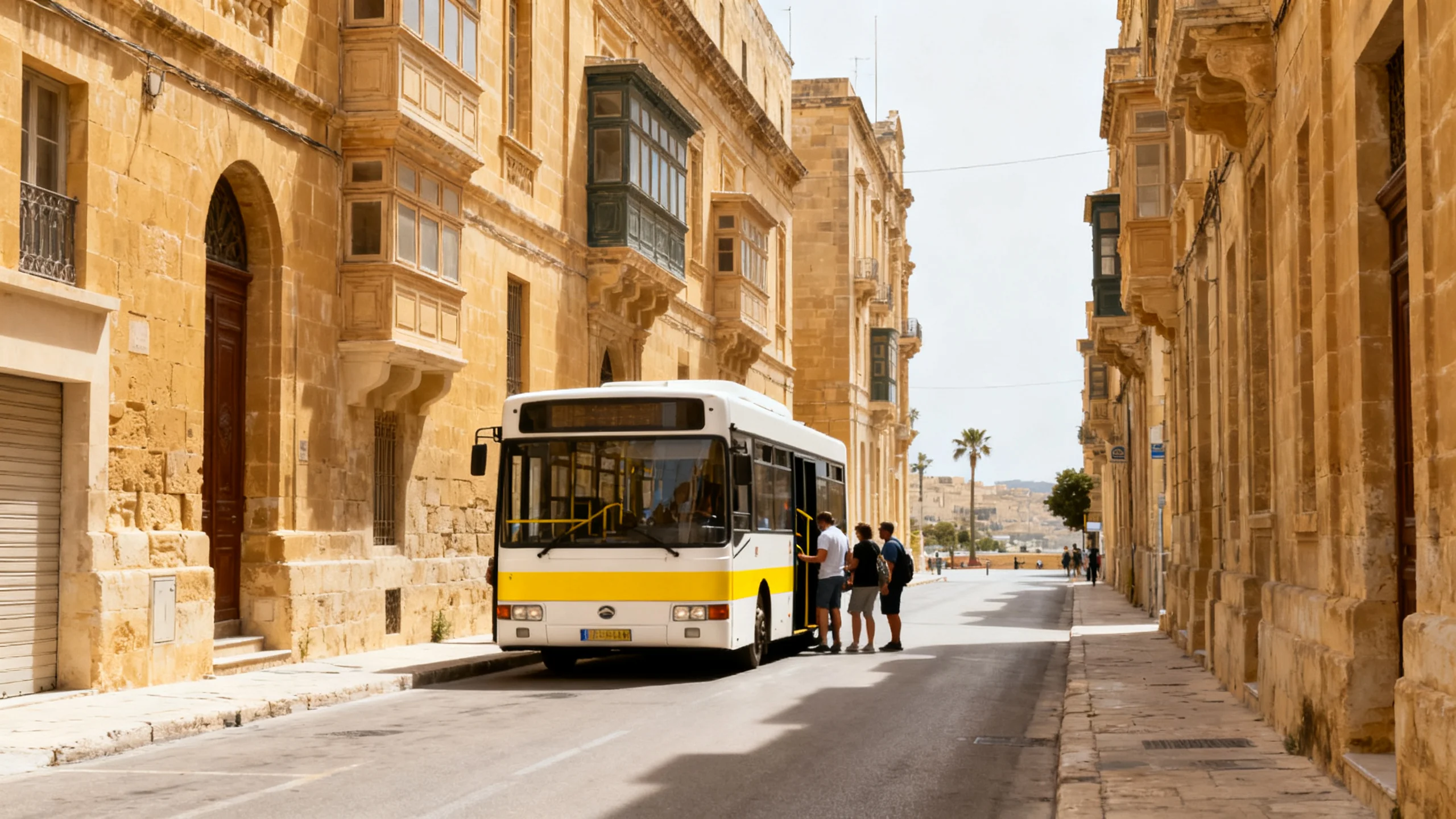
- To Valletta: the ferry from Sliema Strand Wharf, every 30 minutes, €1.50, 5 minutes. Bus #13 also runs the route and is useful when the ferry stops for weather (which happens occasionally in winter).
- To Mdina: bus #202 direct from Sliema, around 50 minutes. Drive if you have a car (20 minutes off-peak).
- To the airport: the X2 express bus runs from St Julian’s, around 45 minutes, €2.50. A Bolt is €15 to €22 depending on time.
- To Gozo: take the X1 bus to Cirkewwa ferry port (around 90 minutes), then the 30-minute ferry to Mġarr.
A rental car here is more burden than help. Parking is genuinely hard, the streets are narrow and one-way, and most of what you want to do (Valletta, Mdina, the airport) is faster by bus or ferry. If you need a car for the rest of Malta, pick it up the morning you leave the area.
Where to sleep
Apartments outweigh hotels. The mid-range apartment buildings along Tower Road in Sliema (sea-facing, 1990s to early 2000s vintage) are the practical sweet spot at €90 to €140 a night in shoulder season. The seaside hotels (Hilton, Westin, Marina Hotel) sit at the top of the range.
Avoid:
- The streets immediately behind Paceville’s clubs (Triq Santa Rita, Triq San Ġorġ, anything within 200 metres of the Bay Street complex). Bass noise carries through concrete walls.
- Inland apartments that advertise “Sliema area” but are actually in Gzira or San Ġwann. The walk to the seafront is fine in daylight but the streets are car-clogged and unattractive.
For a longer comparison and named picks see the where-to-stay page for this region.
How long to stay
One night is enough if this is purely a transit base around a Valletta-focused trip. Two nights makes sense if you want a quieter sleeping area than Valletta proper and the ferry as your daily commute. Beyond two nights and you are spending your trip in the part of Malta that least resembles Malta.
The exception is families with young children who want a self-catering apartment with a supermarket downstairs, a flat seafront promenade for stroller walks, and a short bus to the airport. For that use case, three to four nights here is reasonable.
The honest paragraph
Sliema and St Julian’s are unfairly maligned by the kind of travel writing that wants every region to be either picturesque or wild. They are neither. What they are is competent, modern, walkable Mediterranean coast with a reliable English-speaking service economy and a fast ferry to one of Europe’s best small capitals across the water. If you understand what you are booking, this is a fine practical base. If you booked here expecting Valletta or Gozo, you booked the wrong end of the island.