Mdina is the old capital of Malta, walled and almost silent, sitting on the highest point of the central plateau. Inside the bastions live about three hundred people, descendants of the medieval Maltese nobility. By night you can hear footsteps echo on the limestone slabs. By day, between 10:00 and 16:00, you share the same streets with cruise-ship coach groups. The two experiences are unrelated. The whole centre region (Mdina, Rabat just outside the walls, Mosta and its dome, and the inland villages around them) deserves a slow day. Most travellers give it ninety minutes and the wrong ninety minutes.
The central region is the part of Malta that does not face the sea. Sit at the bastions of Mdina and the view is inland: the dome of Mosta in the middle distance, then a patchwork of low limestone villages, then the southern cliffs. The coast is somewhere over the horizon. This matters because the rest of the country defines itself by the water, and the interior does not. The character is different: agricultural, devotional, slower in pace, more dependent on the church calendar than the cruise calendar.
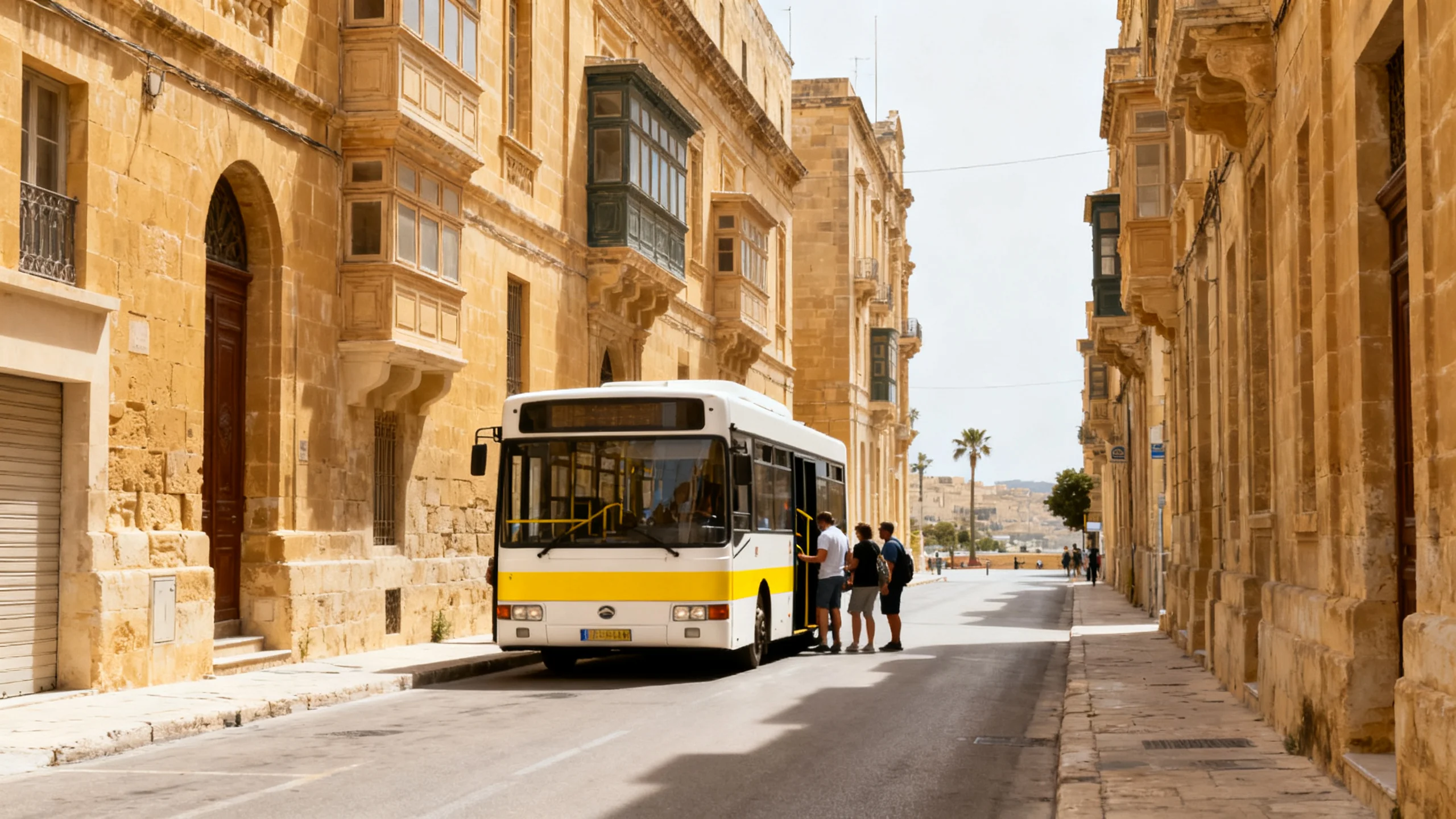
Mdina is the obvious draw. The Phoenicians fortified the hilltop, the Romans rebuilt it as Melite, the Arabs walled the southern half of the existing city and called it Medina, and the Knights of St John ran it from 1530 until they finished Valletta in 1571. After that, Mdina was demoted to “Citta Vecchia” (the old city) and stopped being the seat of power. It also stopped being modernised. What you walk through now is essentially the same medieval-into-baroque street plan, the same enclosed wooden balconies, the same coats of arms above the doors of families still living there.
Mdina: when to go and what to skip
The single most important practical decision about Mdina is the time of day. Between 10:00 and 16:00 the cruise excursions are inside the walls. The lanes are not designed for crowds, and small groups bottleneck quickly at the Cathedral, the Mdina Gate, and the main square. Locals call this “Mdina rush hour” without irony.
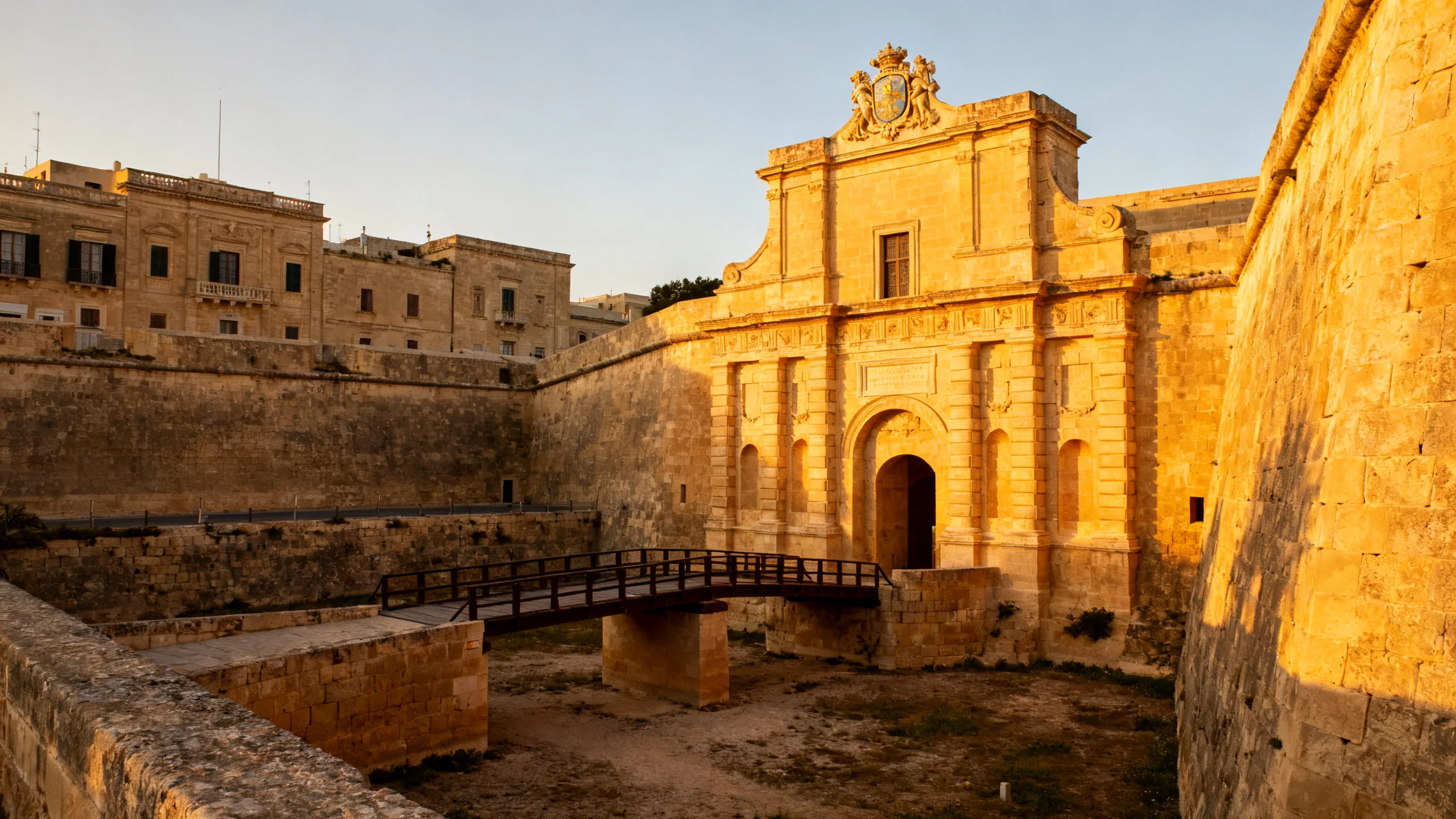
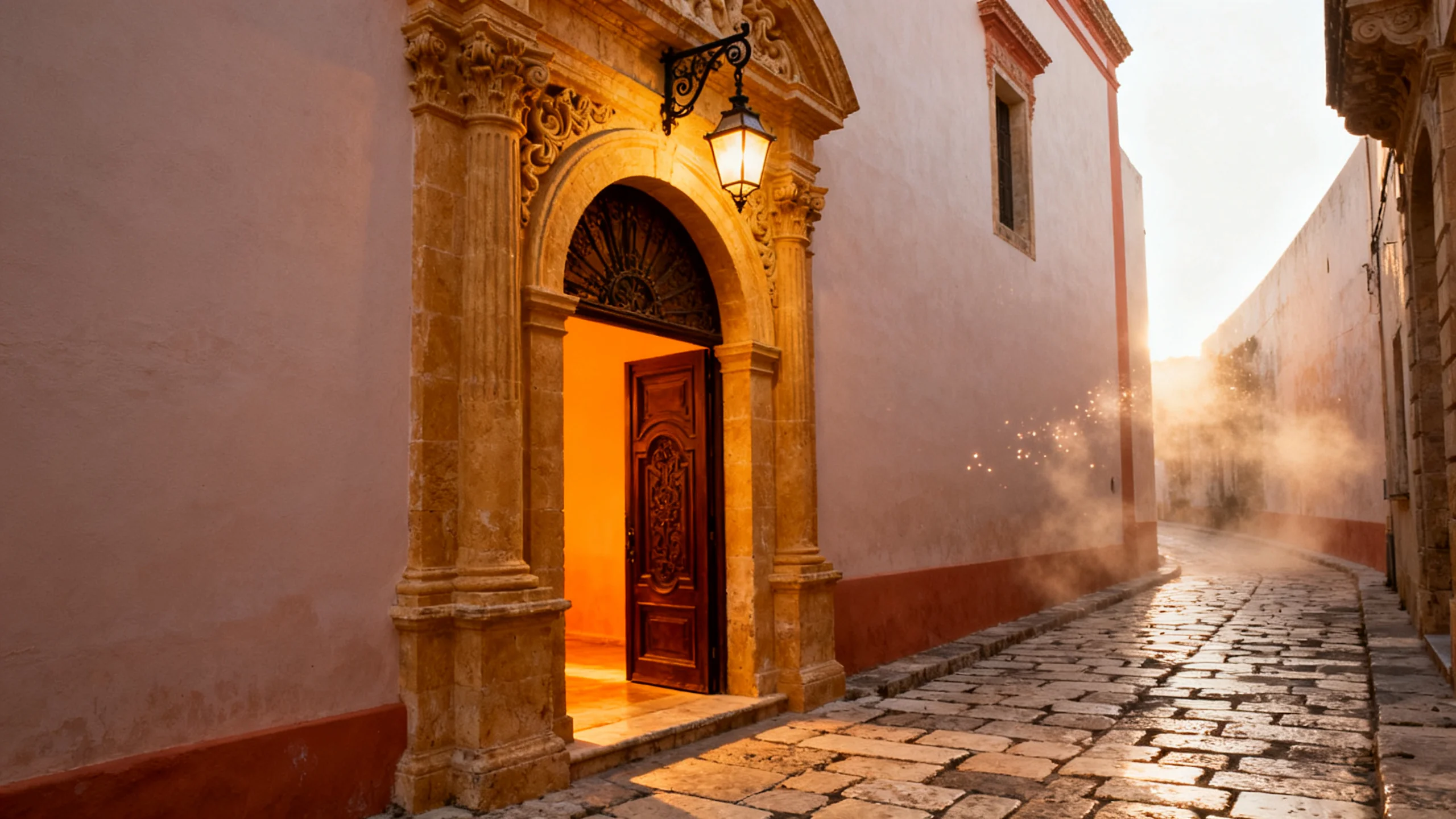
Go instead between 17:00 and 20:00 in spring/autumn, or between 18:30 and 21:00 in summer. The cruise coaches leave by 17:00. The temperature drops. The low sun catches the limestone and turns it from grey to honey. Restaurants inside the walls open at 18:30 to 19:00. A walk that takes forty minutes at noon takes ninety in the evening because you can actually stop.
What to see, in walking order from the gate:
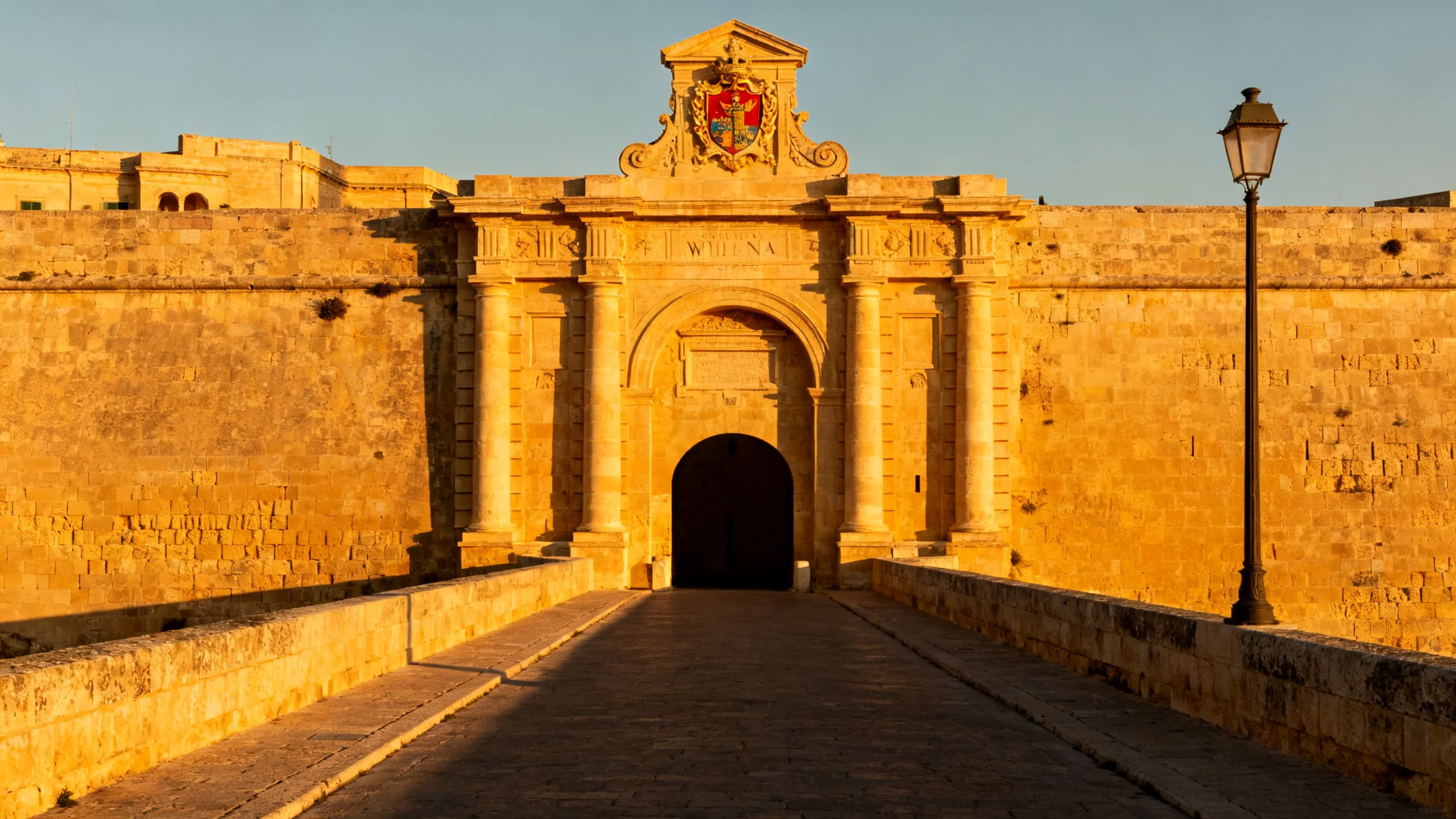
Mdina Gate is the baroque main entrance (1724), with the Vilhena coat of arms and the figures of saints Publius, Paul and Agatha. The drawbridge is gone but you can still see the slot. Pause for thirty seconds before you go in.
Vilhena Palace sits just inside the gate. It now houses the National Museum of Natural History, which is the wrong reason to visit. The building itself, the courtyards, and the limestone staircases are the reason to pay the €5 admission. Half an hour, maybe less.
Triq Villegaignon is the spine of Mdina, running from the gate to the bastions overlooking the central plain. It is also the main souvenir street: walk it for the architecture and skip the shops.
St Paul’s Cathedral is the seat of the Maltese church (Valletta has the Co-Cathedral, Mdina has the senior one). Built in the early 18th century after the original cathedral was destroyed by the 1693 earthquake. Inside: a Mattia Preti vault painting (the same artist who did the St John’s Co-Cathedral interior in Valletta) and a small but serious Cathedral Museum next door. €10, dress code enforced as in Valletta.
Bastion Square at the back of the city is the postcard view of the central plain. The view from here covers most of central and northern Malta on a clear day, from Mosta to the coast. Best in the hour before sunset.
What to skip inside Mdina:
- The Mdina Dungeons, an underground “torture museum” by the cathedral. It is a tourist trap with mannequins and red lighting. Avoid.
- The horse-drawn karozzin carriages that wait at the gate. They are pleasant if you have never sat behind a horse, expensive if you have, and the streets are short enough to walk in twenty minutes.
- Most of the Game of Thrones walking tours unless you came specifically for that. Mdina was used for the King’s Landing exterior shots in season 1, but the locations are obvious without a guide (Mdina Gate, the alley behind the cathedral, Bastion Square).
Rabat: the other half of the visit
Rabat is the town immediately outside the Mdina walls. It is where the Maltese who could not afford to live in Mdina lived from medieval times onward, and it is where most of the genuinely interesting religious archaeology sits. You cross the small ditch at the gate and you are there.
St Paul’s Catacombs is the main reason to come. A 2,000 m² network of early Roman and early Christian underground burial chambers cut into the limestone, dating mostly from the 4th to 9th centuries. The visitor route covers about half of it with lit corridors and explanation panels. €6, audioguide included, allow ninety minutes. The complex of agape tables (low communal dining slabs cut into the rock for funerary meals) is unique in the central Mediterranean and worth specifically looking for.
St Paul’s Grotto and St Agatha’s Catacombs are smaller variants nearby, free or cheap, mostly of interest if you are already deep into early Christian archaeology.
Domus Romana at the edge of Rabat is the only fully excavated Roman house on the island, with intact mosaic floors and a small museum. €6, takes 45 minutes.
For lunch, Crystal Palace at the bottom of the Rabat hill is the famous pastizzeria. Two pastizzi (one ricotta, one mushy-peas) plus a tea, cash only, under €3. Not a destination on its own but if you are passing on foot it is the right stop.
Mosta and the dome
Mosta is the next town along the central plateau, fifteen minutes from Mdina by car or bus. The Rotunda of the Assumption is the unmissable structure: the third largest unsupported dome in Europe, finished in 1860, modelled on the Pantheon in Rome.
The story everyone tells about Mosta is the 9 April 1942 bomb. A Luftwaffe SC 500 bomb pierced the dome during afternoon mass, with around three hundred people inside, and failed to detonate. The original bomb (defused) is on display in the sacristy. The hole in the dome was repaired but the story turned the church into a national symbol of the wartime period.
Beyond the dome, Mosta itself is a working market town. The square is fine for a coffee, not a destination. Twenty minutes inside, twenty in the square, then move on.
The central villages
Inland of Sliema, west of the airport, there are about a dozen small villages that most travel writing skips. They are residential, conservative, agricultural in feel even where agriculture has retreated, and centred on their parish church.
The signature stop is San Anton Gardens in Attard, the gardens around the President of Malta’s official residence. Free, open daily, formal layout from the 17th century, with old cypress trees, a small aviary and the orange trees that gave the area its name. Forty-five minutes is enough; an hour if you want to read a book on a bench.
The Three Villages (Attard, Balzan, Lija) are best walked together in a slow loop. The architectural interest is the early 20th-century villa belt, with limestone facades, gallarija balconies, and the over-the-top village mansions of merchants who made money trading wine and grain.
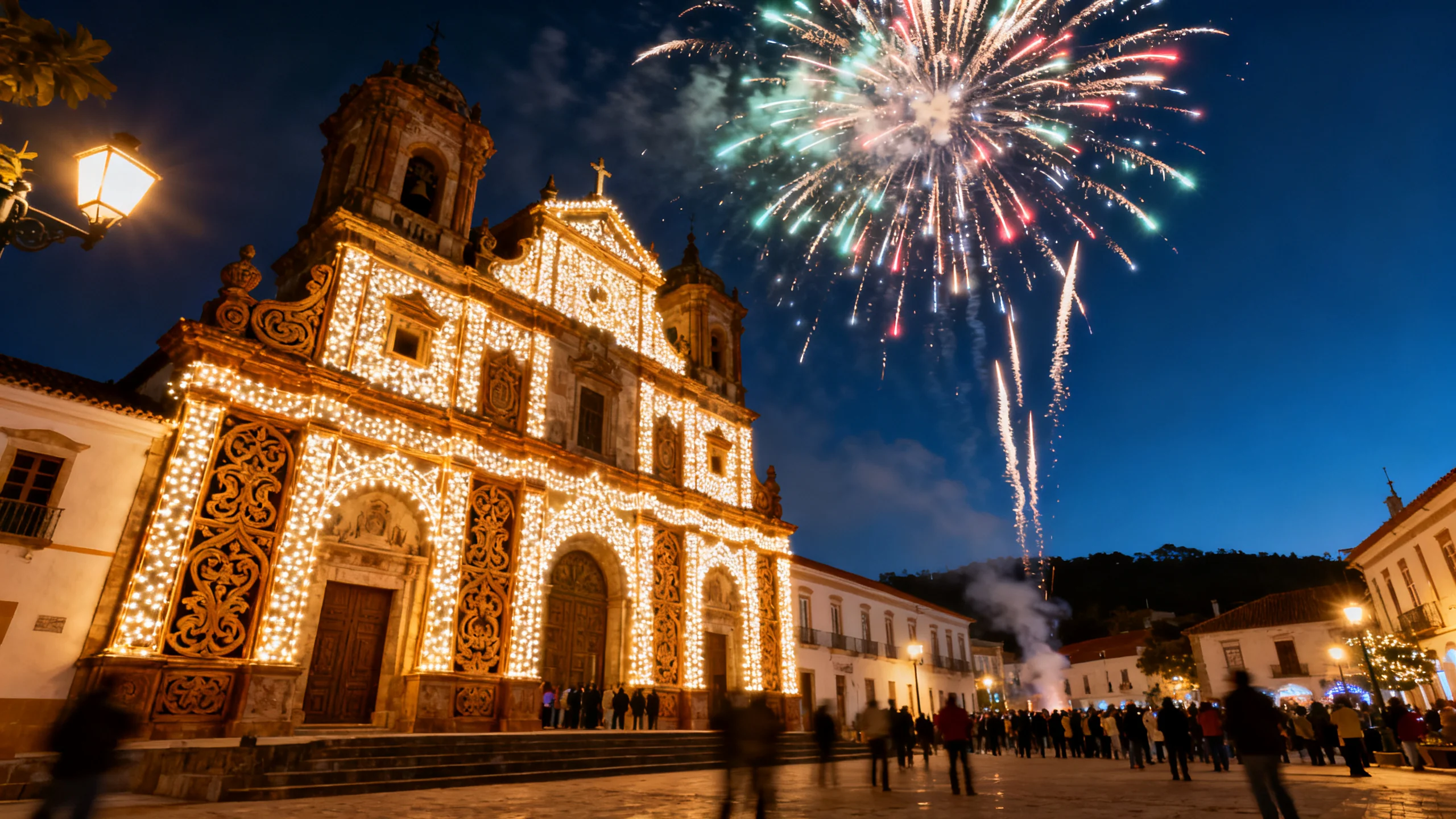
In summer (mid-June to early September), the village festa circuit is the reason to come. Each village celebrates its patron saint over four days. The fireworks competition between rival villages is genuine: every parish has a pyrotechnics committee, and the ground-level (zigarella) and high-altitude displays escalate week by week. Plan ahead because the schedule is fixed by saints’ days, not tourist convenience. The major ones are Mosta (15 August), Lija (around 6 August), Gharghur (June), Naxxar (8 September).
Getting in and out
The interior is the part of Malta where a rental car earns its rent. The bus network connects Mdina and Mosta well, but the smaller villages are tedious by public transport.
- From Valletta to Mdina: bus #202 or #51, about 45 minutes, €2.50. Or drive (20 minutes off-peak).
- From Sliema to Mdina: bus #202 direct, about 50 minutes.
- From Mdina to Mosta: bus #186 or #41, around 20 minutes. Or drive (10 minutes).
- From Mdina to St Paul’s Catacombs (Rabat): walk, 8 minutes downhill outside the gate. No need for transport.
Where to sleep
There are five hotels inside Mdina (Xara Palace is the famous one, all the others are smaller boutique conversions), all in the €220 to €450 a night range. The pitch for staying inside the walls is straightforward: you have Mdina to yourself between 21:00 and 09:00, when no day-tripper is anywhere near. If the budget allows, one or two nights here is the kind of trip people remember years later.
If the budget does not allow, Rabat just outside the walls has guesthouses at €80 to €130 a night with the same evening-Mdina access by a 5-minute walk. Detailed picks on the where-to-stay page for this region.
How long to stay
For a daytrip-only visit: about five hours covers Mdina (90 minutes), Rabat with the catacombs (90 minutes), lunch, and Mosta (60 minutes). Arrive at 14:00, leave at 19:30 to catch the golden hour in Mdina last. This works as a single day inserted into a Valletta-based or Sliema-based stay.
For an overnight visit: two nights inside or just outside Mdina, with one full day for Mdina and Rabat in the late afternoon and a second day for the village circuit, San Anton, and Mosta. Three nights is the maximum unless you are coming specifically for a sequence of summer festas.
The honest paragraph
Mdina is the most over-photographed and best-photographed small place in Malta, and the gap is entirely about when you visit. The travel guides say “half a day in Mdina”; the half they recommend is the wrong half. Come for the late afternoon and the evening, sleep nearby if you can, and the silent walled city is one of the strongest single impressions Malta offers. Try to do it as a noon coach stop and you have wasted both your time and Mdina’s.