The half-day walking tour of Malta's old capital. Mdina cathedral, Bastion Square sunset, St Paul's Catacombs in Rabat, and what time to actually visit.
Mdina is the old capital of Malta. The Phoenicians fortified the hilltop in the 8th century BC. The Romans rebuilt it as Melite. The Arabs walled the southern half. The Knights of St John ran it from 1530 to 1571, when they moved the seat of power to the new city at Valletta. After that, Mdina was demoted to “Citta Vecchia” (the old city) and stopped being modernised. What you walk through today is essentially the medieval-into-baroque street plan, with around three hundred residents still inside the walls.
Rabat is the town immediately outside the gate. It is where the Maltese who could not afford to live in Mdina lived, and it is where most of the early Christian archaeology of the island sits.
A half-day visit covers both. The single most important practical decision is the time of day for Mdina.
When to go
Strongly recommended: late afternoon to evening.
Between 10:00 and 16:00, cruise excursions clog the central streets. The Cathedral has 30-minute queues. The lanes near the Gate bottleneck quickly. Locals call this “Mdina rush hour” without irony.
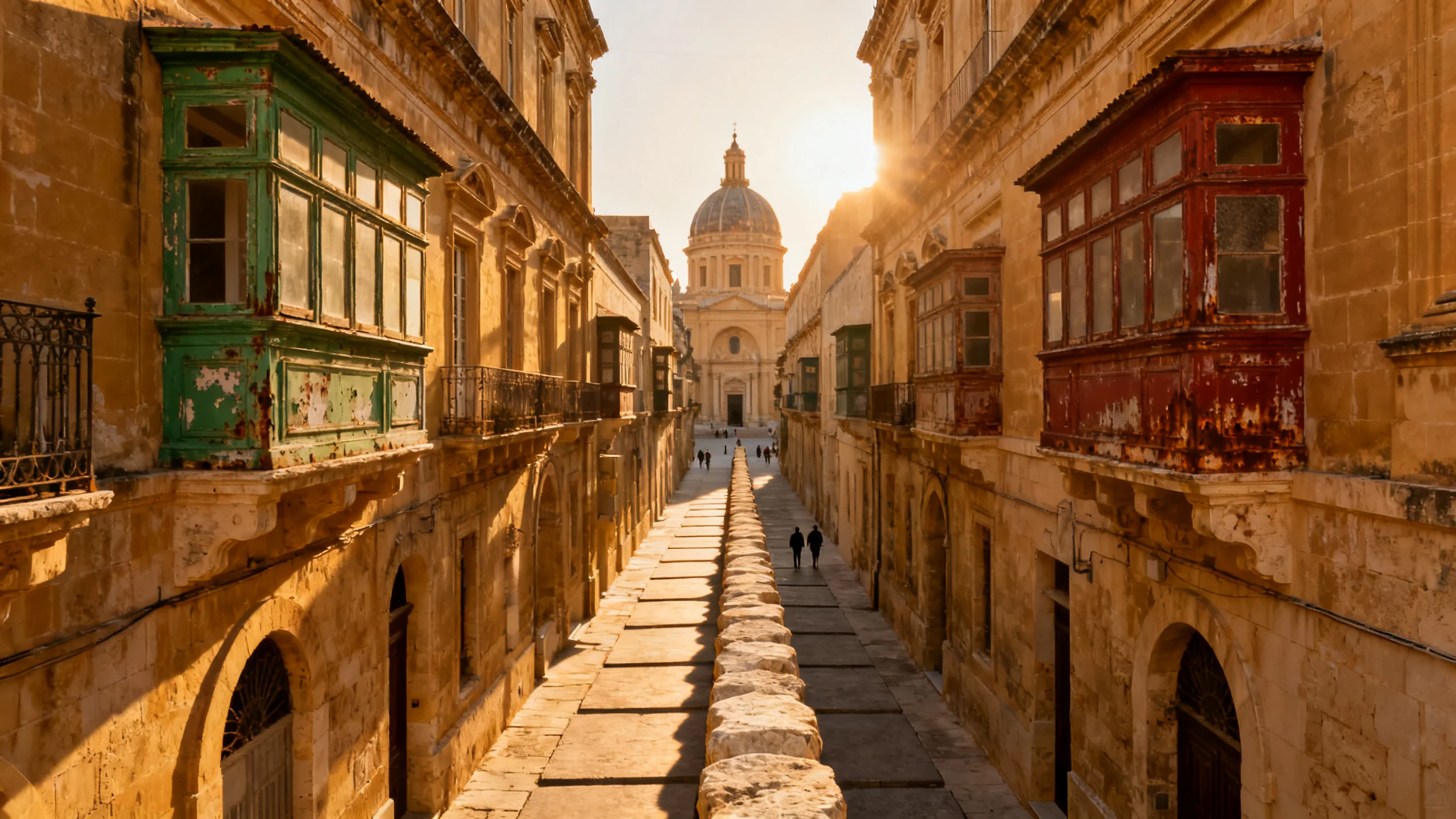
Go instead between 15:30 and 19:00 in spring and autumn, or 17:00 and 21:00 in summer. The cruise coaches leave by 16:30. The temperature drops. The low sun catches the limestone and turns it from grey to honey. A walk that takes 40 minutes at noon takes 90 minutes in the evening because you can actually stop.
If you must visit at midday (because of a fixed tour schedule), arrive at 10:00 and leave by 12:00 before the worst of the crowd builds.
The walking sequence
Start in Rabat at the bottom of the hill if you arrive by bus or car; finish in Mdina with sunset at Bastion Square.
Rabat (morning or early afternoon)
St Paul’s Catacombs is the headline. A 2,000 m² network of early Christian burial chambers carved into the limestone, dating mostly from the 4th to 9th centuries. The visitor route covers about half the complex with lit corridors and panel explanations. €6 admission, audioguide included, allow 90 minutes. The agape tables (low rock-cut communal dining slabs) are unique in the central Mediterranean.
Domus Romana is a 5-minute walk from the catacombs. The only fully excavated Roman house on Malta, with intact mosaic floors and a small museum. €6, 45 minutes.
Lunch in Rabat: Crystal Palace pastizzeria at the bottom of the Rabat hill (under €3 for two pastizzi and tea, cash only). Or a sit-down lunch at Ta’ Doni on Triq Santu Wistin.
Mdina (late afternoon to evening)
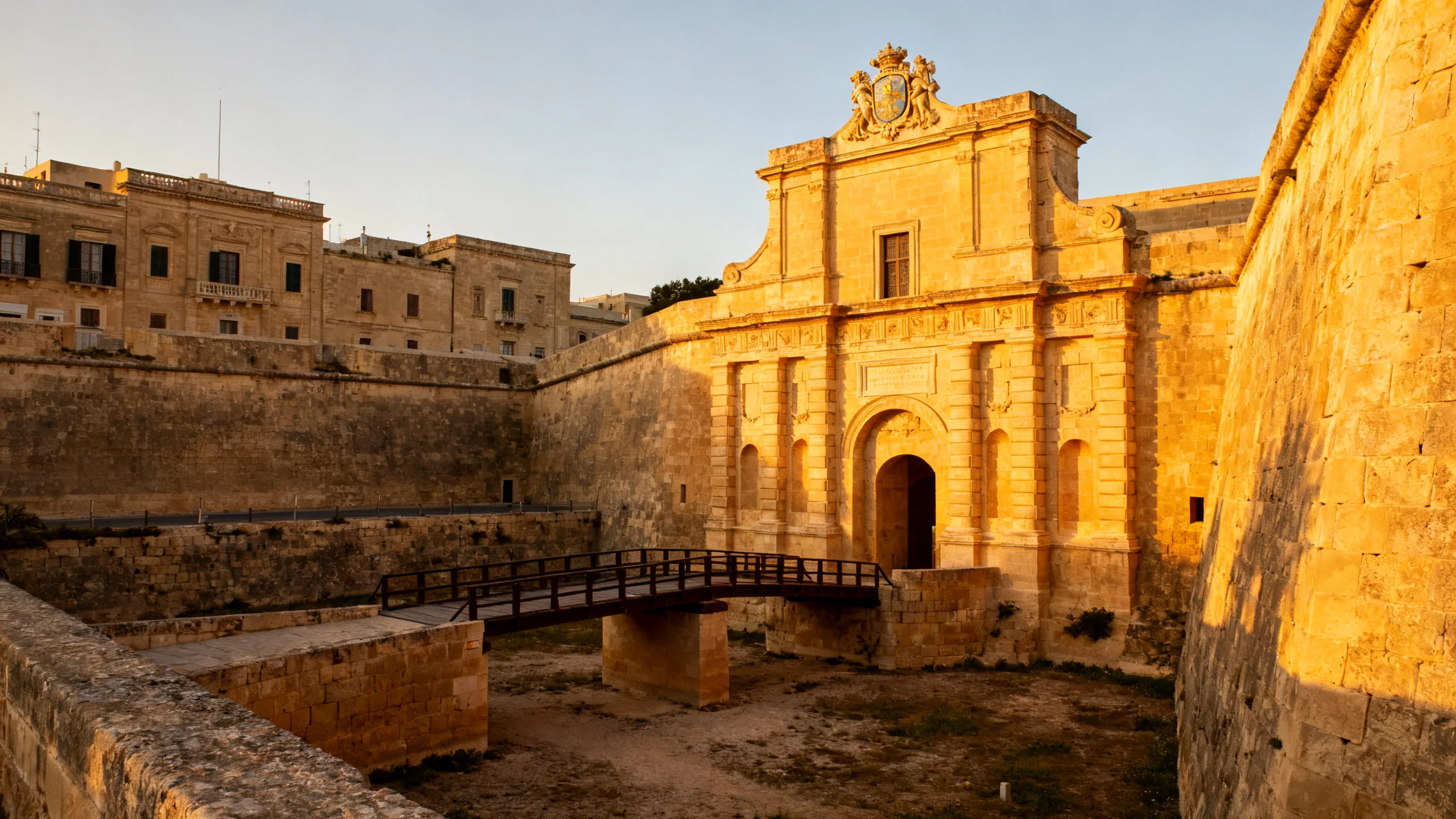
Walk uphill through the small gateway connecting Rabat to Mdina. The Mdina Gate is 300 metres up.
Mdina Gate (1724). Baroque main entrance with the Vilhena coat of arms. Pause for the carved stonework.
Triq Villegaignon is the spine of Mdina, running from the gate to the bastions overlooking the central plain. 600 metres end to end.
St Paul’s Cathedral and Museum in the central square (€10 combined ticket, 90 minutes). Built in the early 18th century after the 1693 earthquake destroyed the original. The Mattia Preti vault painting is the highlight. The cathedral museum next door has an unexpectedly strong collection.
Palazzo Falson on Triq Villegaignon. The Vilhena family’s 16th-century residence, now a museum of antiques. €10, 60 minutes if you take the audio tour.
Bastion Square at the back of Mdina, with the view sweeping over the central plain. Best 30 minutes before sunset.
Sunset on the bastions: Bastion Square in spring or autumn. From summer, walk the upper bastion road for a slightly different angle as the sun drops behind the central plateau.
Dinner inside Mdina at Trattoria AD 1530 (casual pasta), The Medina (Maltese kitchen in a converted 11th-century building), or, with budget and a reservation, De Mondion at the Xara Palace (the only Michelin star in Malta).
Self-guided vs guided
The walk is easy to follow without a guide. The streets are short and well-signed.
A guided tour (€20-30 per person, 2-3 hours) adds the historical narrative connecting the buildings, the family stories of the still-occupied palazzi, and the small details (carved devices on portals, the inscriptions on the cathedral floor).
Book a small-group Mdina + Rabat tour on GetYourGuide. Most include the Cathedral entry but verify before booking.
What to skip
- The Mdina Dungeons, an underground “torture museum” with mannequins and red lighting. Tourist trap.
- Karozzin horse-drawn carriages at the gate. The streets are 600 metres end to end; walk.
- Most Game of Thrones walking tours unless you came specifically for the King’s Landing exteriors. The locations are obvious without a guide.
How long to spend
Three hours covers Mdina alone (Gate + walking spine + Cathedral + Bastion Square).
Four to five hours covers Mdina + Rabat (Cathedral + Catacombs + Domus Romana + lunch).
A full day adds Mosta (the dome and the 1942 bomb story, 15 minutes’ drive away) and optionally San Anton Gardens in Attard.
For the full region context, see the Mdina, Rabat & the centre regional hub.
Accessibility
Mdina has limestone-slab paving with frequent small steps in the side streets. The main streets (Triq Villegaignon, the Cathedral square, the Gate area) are flat and wheelchair-accessible. The descending lanes toward the bastions are not.
The Cathedral and Vilhena Palace have ramped access. St Paul’s Catacombs has a level approach but the underground sections themselves are not accessible.
Related reading
- Mdina, Rabat & the centre region: the regional context.
- Mdina hotels: sleeping inside the walls.
- Baroque Malta: the cathedral’s place in the wider story.
- Limestone architecture: why the city looks the way it does.
- 3-day itinerary: how Mdina slots into a short trip.