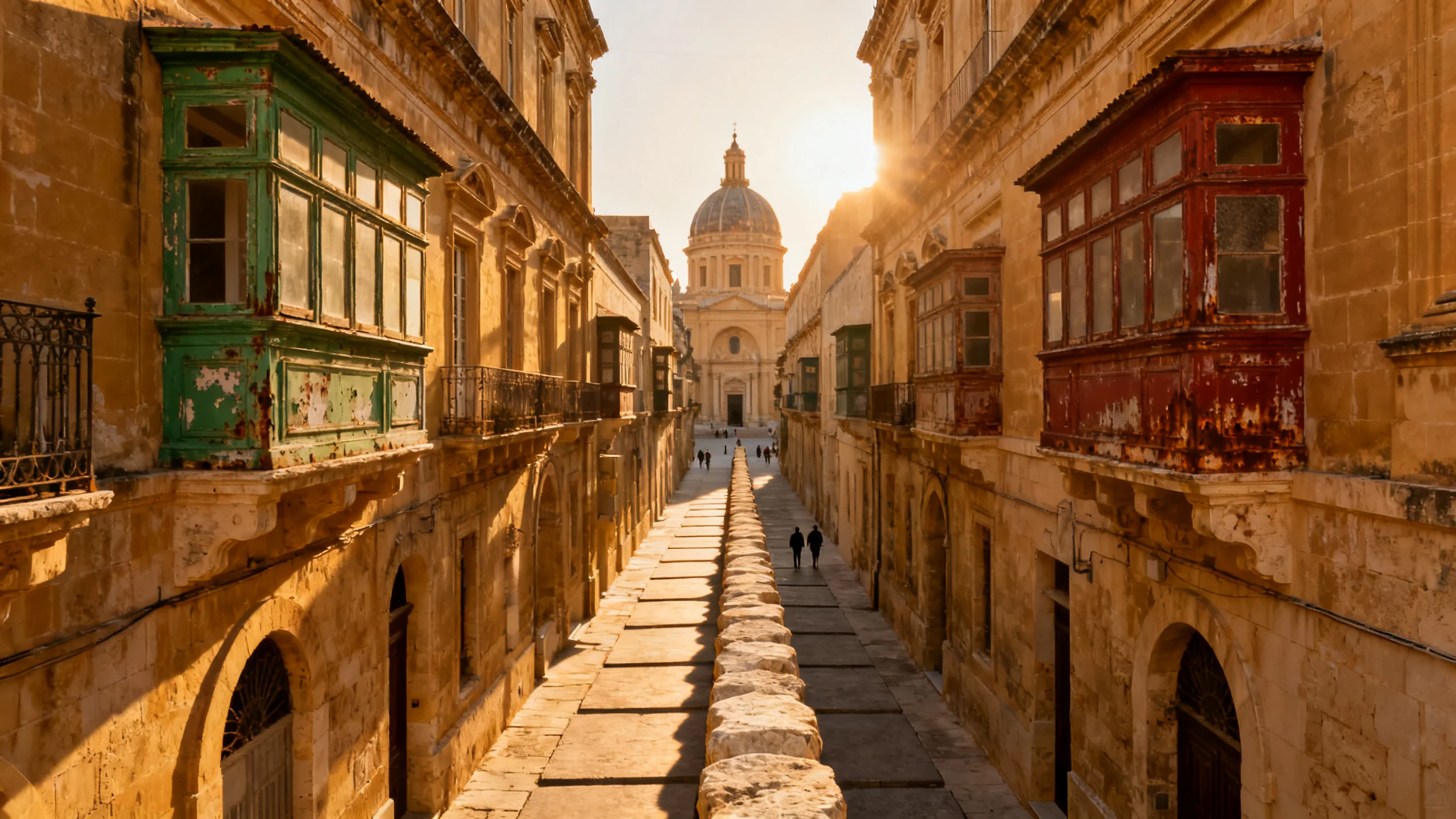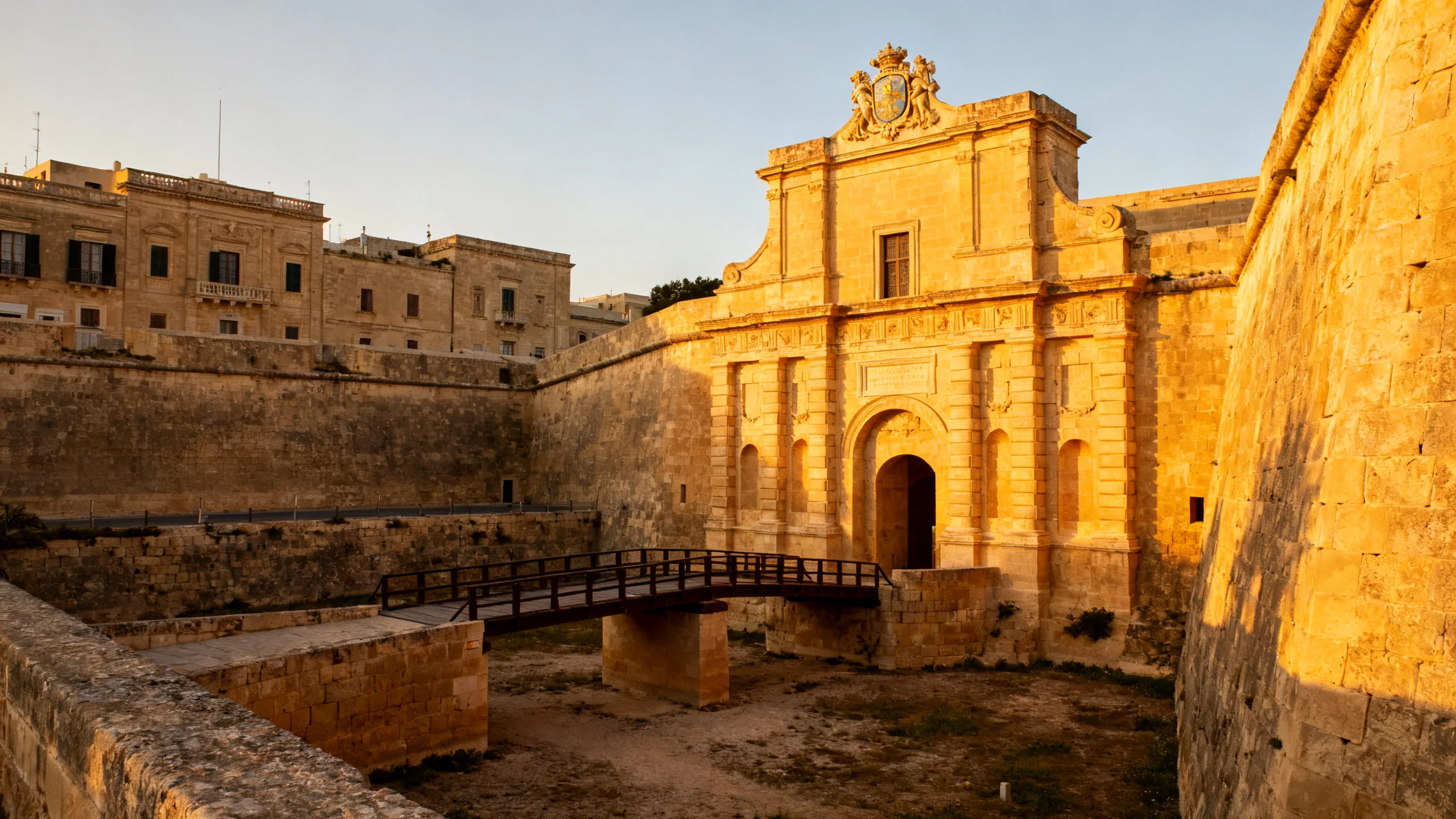
The Knights of St John's conventual church in Valletta, with the two original Caravaggios and a marble tombstone floor of every Knight. Booking tips, dress code, what to look for.
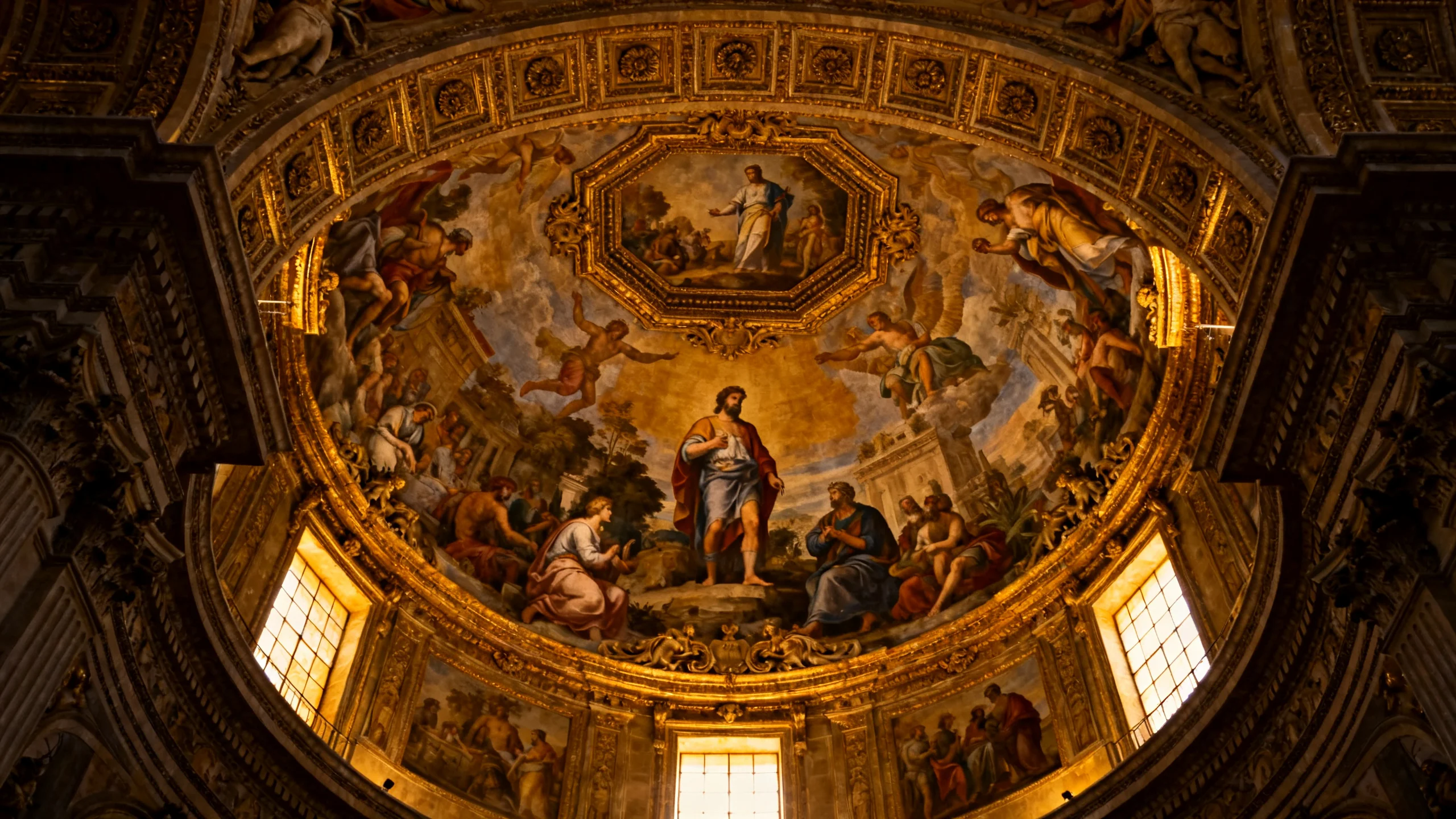
St John’s Co-Cathedral in Valletta is the most heavily ornamented baroque interior in Malta and one of the best preserved in Europe. The exterior is austere, almost military, by the Knights’ own design: they wanted the cathedral to look like a fortress. The interior is the opposite: carved gilding on every column, painted scenes on every vault, and a floor entirely covered in marble inlaid tombstones of the Knights themselves.
The two original Caravaggios in the Oratory off the nave include the largest canvas Caravaggio ever painted and the only one he signed in full. The cathedral is the strongest single cultural visit in Malta.
The history
Built between 1572 and 1577 as the conventual church of the Knights of St John. Designed by Girolamo Cassar, a Maltese-born Knight, on a basilica plan. Upgraded to “Co-Cathedral” status in 1816, sharing the seat of the Maltese church with Mdina’s St Paul’s Cathedral.
The interior was redecorated in the high baroque style between 1660 and 1730 under successive Grand Masters. The painted vault (1661-1666) is by Mattia Preti, the Calabrese painter who spent the rest of his life on Malta. The carved gilding on the pilasters and the langues’ side chapels was executed by Maltese craftsmen with Italian guild oversight.
What to look for
The vault. Eighteen painted scenes from the life of John the Baptist, executed by Mattia Preti directly onto the limestone (not on plaster, which is technically unusual). The narrative starts above the entrance and runs to the apse.
The marble tombstone floor. Every slab is the grave marker of a Knight, with the family arms, a Latin epitaph, and personal devices (death’s heads, hourglasses, broken columns). Over 400 tombstones total. The most senior Knights are buried in the chapels of the langues; the rest are spread across the nave.
The langue chapels. Eight chapels (one per langue, or national group), each decorated in the style of the langue’s national art. The most ornate are the Italian and Spanish (Castille) chapels.
The Oratory. The single most important room. Holds the two Caravaggios:
- The Beheading of St John the Baptist (1608). The largest canvas Caravaggio ever painted (over 5 metres by 3.5 metres) and the only one he signed in full (“F. Michelang.o.f.”). Painted as part of his admission as a Knight under Grand Master Alof de Wignacourt. Restored most recently in 2003-2006; the colour clarity is the best it has been in 200 years.
- St Jerome Writing (1608). A smaller canvas in the same room. Saint shown writing in his study with intense chiaroscuro.
The Oratory has limited capacity (40 people at a time). Cathedral staff move visitors through in waves. The closer you go to opening or closing time, the more time you have alone with the paintings.
The Cathedral Museum off the cathedral nave includes the Knights’ processional vestments, manuscripts, and a small collection of paintings.
Booking and timing
Tickets are €15 standard adult (€12 student, €5 child 6-12, free under 6), including the audioguide. The audioguide is excellent: 60-90 minutes of content, multiple languages.
Book online at stjohnscocathedral.com to skip the door queue, which can be 30-45 minutes in summer. The timed ticket is a 15-minute window; arrive within the window or your ticket is forfeited.
Best times to go:
- Just after opening (09:30): smallest crowds in the Oratory.
- After 15:00: the cathedral tends to empty as cruise crowds head back to their ships.
- Sunday is closed for Mass: the cathedral itself is open for worship but tourist visits stop at 12:00 on Sundays.
Book the skip-the-line ticket on GetYourGuide for the timed entry plus the audioguide.
Dress code
Strictly enforced. No shorts (men or women), no bare shoulders, no short skirts above the knee. The cathedral lends cover-ups at the entrance if you arrive unprepared, but it slows your entry by 5-10 minutes. Plan to dress appropriately.
Photography without flash is permitted inside the nave but not in the Oratory (where the Caravaggios are).
How long to spend
90 minutes is the floor for a competent visit covering the vault, the floor, two or three langue chapels, the Oratory, and a glance at the Cathedral Museum.
Two hours is comfortable for the full audioguide and a careful look at the Caravaggios in the Oratory.
Three hours is for serious art lovers who want to spend time in front of each major painting.
Combine with
- The Valletta walking tour in the same day. The cathedral fits naturally mid-morning or mid-afternoon. See the Valletta walking tour activity.
- Casa Rocca Piccola (5 minutes’ walk from the cathedral) for the still-occupied palazzo tour.
- The National Museum of Archaeology (across the square) for the temple artefacts.
What to skip
- The flash photography signs are not suggestions. Camera staff watch and will ask you to leave if you ignore them.
- The gift shop at the exit has standard cathedral merchandise (mugs, postcards, miniature Caravaggios). The Maltese-made things worth buying are the silver filigree from Sciortino on Old Theatre Street, not here.
Accessibility
The cathedral has a step at the main entrance but a wheelchair ramp at the side entrance. Most of the nave is wheelchair-accessible. The Oratory is up two steps; staff assist on request.
Related reading
- Baroque Malta: what the Knights paid for, room by room.
- The Knights of St John: the patrons of the cathedral.
- Valletta walking tour: the wider 3-hour route the cathedral sits inside.
- Valletta & the Three Cities: the regional context.
- Long weekend itinerary: how the cathedral anchors a 3-day plan.