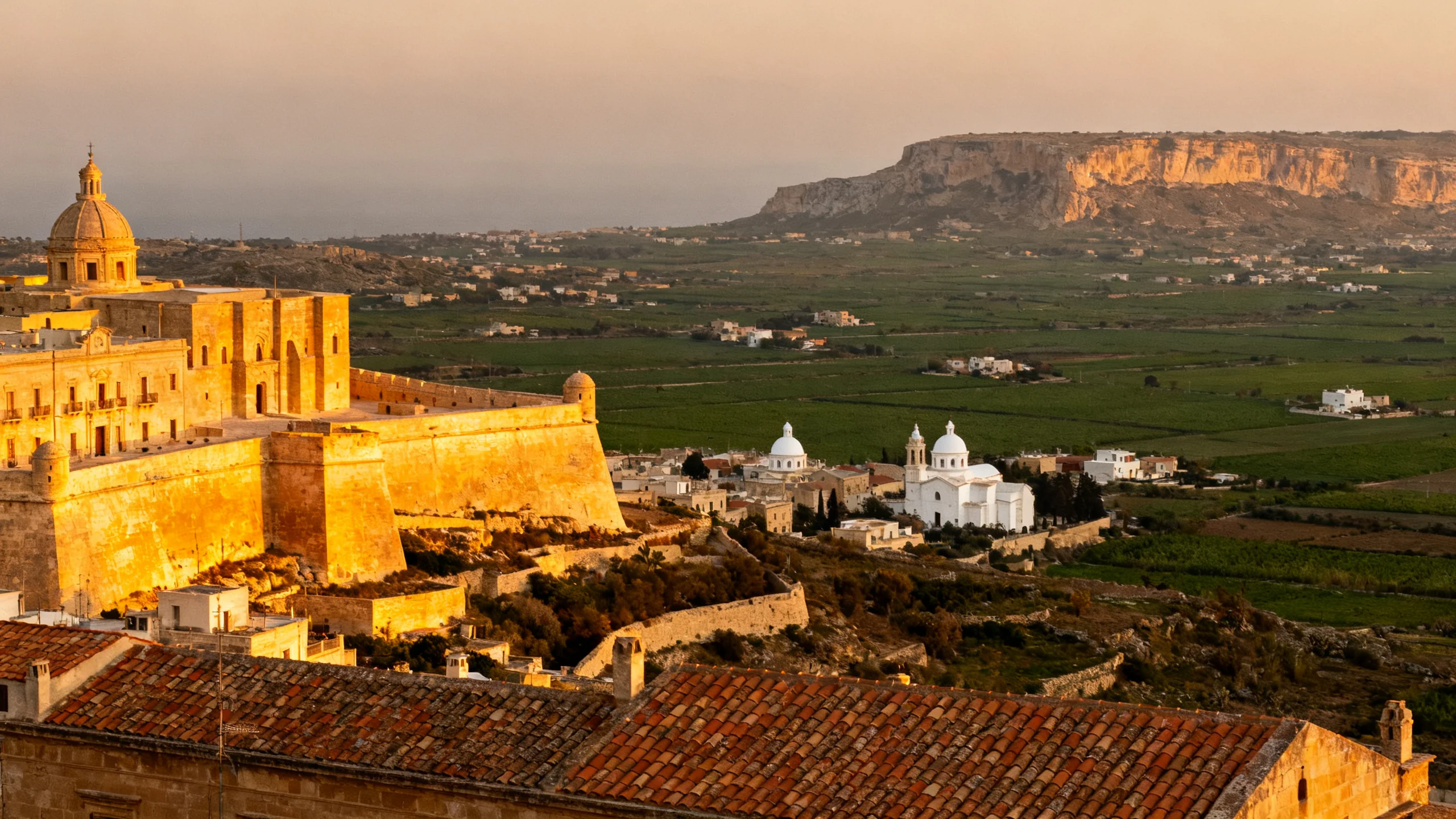
Gozo is the second island of the Maltese archipelago and the one that most visitors underestimate. It is greener than Malta because it gets more rain. It is more agricultural because the Knights of St John never developed it the way they developed Valletta and the Grand Harbour. It is quieter because the population is around 33,000 spread across 67 km². And it runs to a different clock. Shops close from 13:00 to 16:00 in the heat of summer, the parish church bells set the rhythm of the day, and Sundays still mean church and family lunch rather than tourism. The signature mistake travellers make about Gozo is treating it as a day trip from Malta. The signature pleasure is the second night there, after the first day has slowed you down.
The first thing about Gozo is the ferry, and the first thing about the ferry is that it forces a small reset. You drive onto the boat at Cirkewwa in Malta, you stand on the upper deck for the 25-minute crossing, you watch Comino slide past on your left, and then you drive off in Mġarr on Gozo. There is no bridge. There has been talk of a tunnel for two decades; it has never been built. The crossing is short enough to be unimportant, long enough to mark a change of pace.
Gozo is roughly a third the size of Malta. The road network runs in a loop with spokes inward, so almost any village is within twenty minutes of Victoria, the central town. Most travellers base in or near Victoria, in Xlendi (the small resort village on the south-west coast), in Marsalforn (the larger north-coast resort), or in one of the converted limestone farmhouses scattered through the inland villages. Each base has a slightly different logic, and the section on accommodation at the bottom unpacks them.
Victoria and the Cittadella
Victoria is officially called Rabat by Gozitans, who never adopted the colonial name imposed in 1897 to mark Queen Victoria’s Diamond Jubilee. Use whichever you prefer; everyone understands both. It is the administrative centre of the island, with about 7,000 residents, and the only Gozitan town that feels properly urban (which on Gozo means small streets, a working market, a bus terminus and several banks).
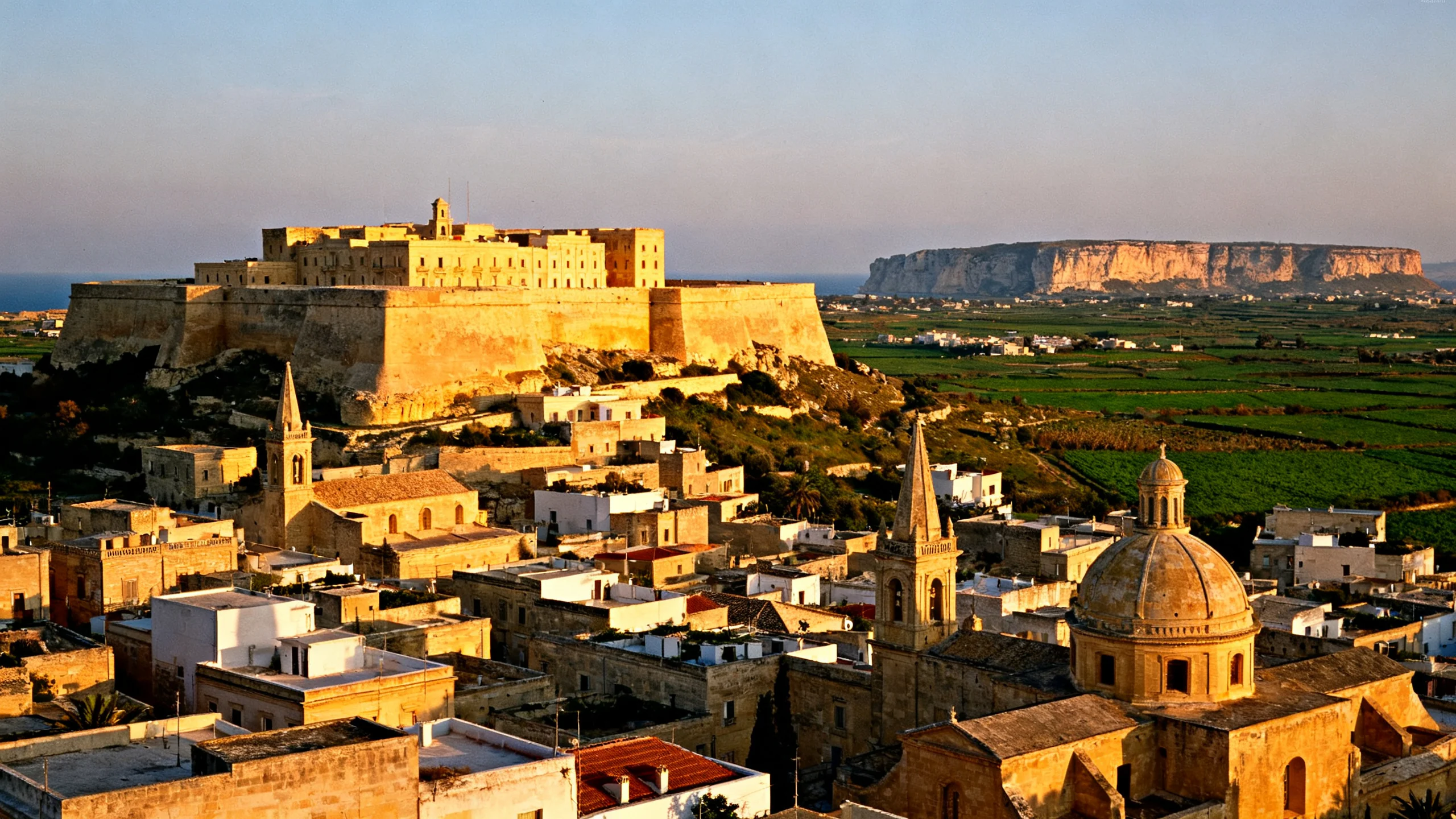
The Cittadella is the fortified medieval citadel that rises 90 m above the main square, visible from most of central Gozo. The walls you see now are 17th-century reinforcements built by the Knights after a 1551 Ottoman raid that took 5,000 Gozitans into slavery. The town inside was inhabited until the 17th century and then largely abandoned; today it is restored, walkable, and contains the Cathedral of the Assumption, the Old Prisons, the Cathedral Museum, and a partial reconstruction of a 17th-century house.
The Cittadella walls themselves are the main attraction. You can walk the full circuit on top of the bastions in about 30 minutes, with continuous views over the island: Victoria below, Xagħra and Ġgantija to the north-east, the cliffs of Ta’ Ċenċ to the south, and on a clear day the village domes of half of Gozo. Free, open access, best at the start or end of the day.
For practical Victoria, the It-Tokk market in the main square (Pjazza Indipendenza) sells produce in the morning, with souvenir-and-craft stalls overlaying it from late morning. The Saturday morning version is the busiest. The cafés around the square are the locals’ weekend meeting point.
Ġgantija and the Xagħra plateau
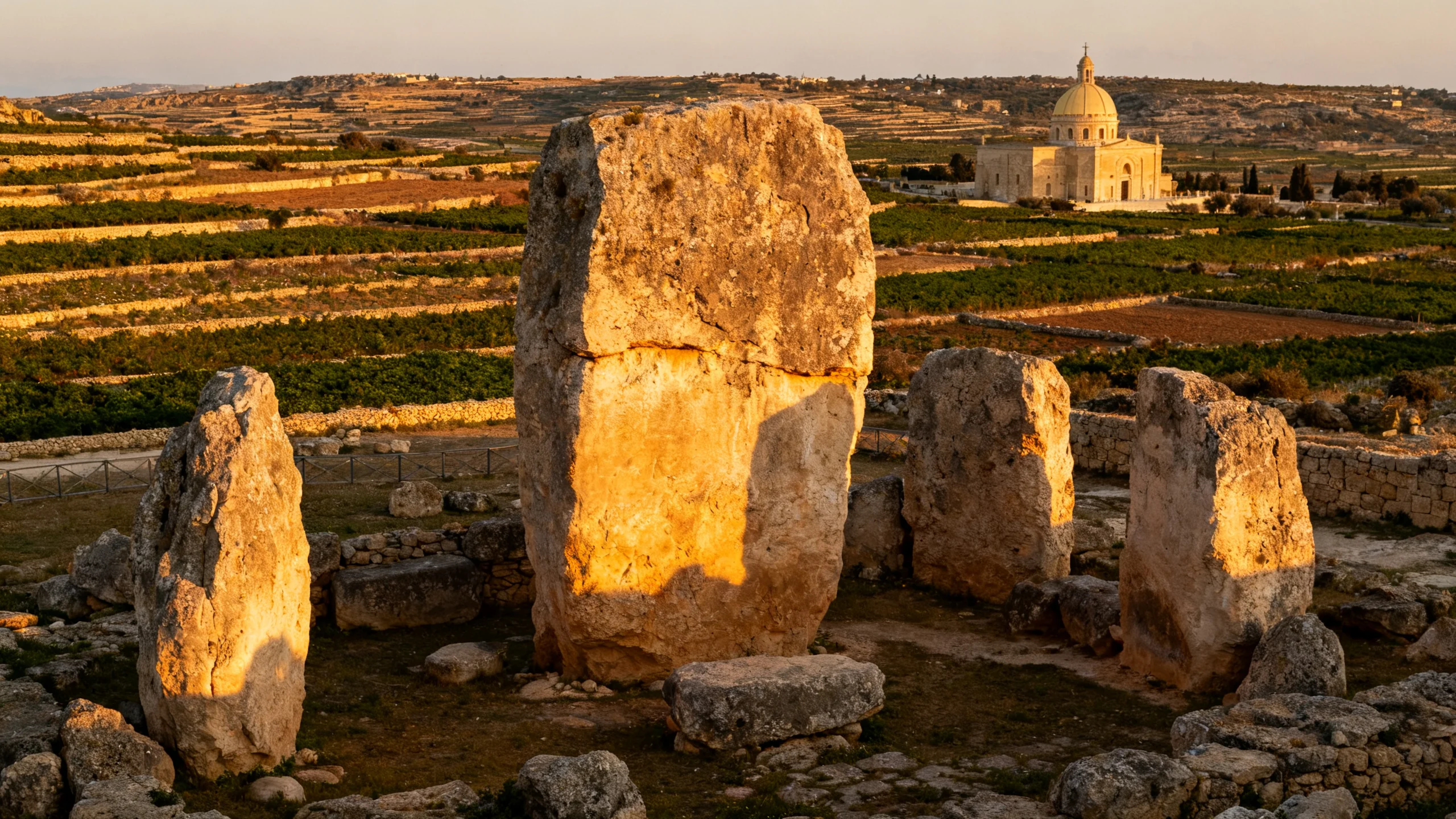
Ġgantija is the older megalithic temple complex on the island, in fact the older of the two on the entire archipelago. The current radiocarbon estimate puts construction between 3600 and 3200 BC, which makes Ġgantija around a thousand years older than the Egyptian pyramids and three to five centuries older than Hagar Qim and Mnajdra on Malta. Two adjoining temples sit within a shared enclosing wall, with the larger southern temple still containing slabs over 5 metres tall and weighing in excess of 50 tonnes.
A combined ticket (€10) covers Ġgantija + the small museum next to it + Ta’ Kola windmill (a working 18th-century windmill 200 m down the road) + the Xagħra Stone Circle (a Neolithic burial complex marked but not yet excavated and not visitable beyond a viewing platform). Plan two hours for the whole cluster, ideally first thing in the morning before the day-trip tour groups arrive at 11:00.
Xagħra village itself is pleasant, has the parish church of the Nativity of Our Lady, and is a reasonable lunch stop. The Ta’ Frenc restaurant just outside the village is the high-end pick on the island; book ahead.
Dwejra, after the Azure Window
The Azure Window collapsed into the sea on 8 March 2017 during a strong winter storm. There was an audible crack heard in the nearby village, and within minutes the limestone arch (one of the most photographed natural features in the country) was gone. There is no replacement, no reconstruction, no plan to rebuild. Photographs and videos of the Azure Window are now historical material, and AI-generated images of it should be ignored.
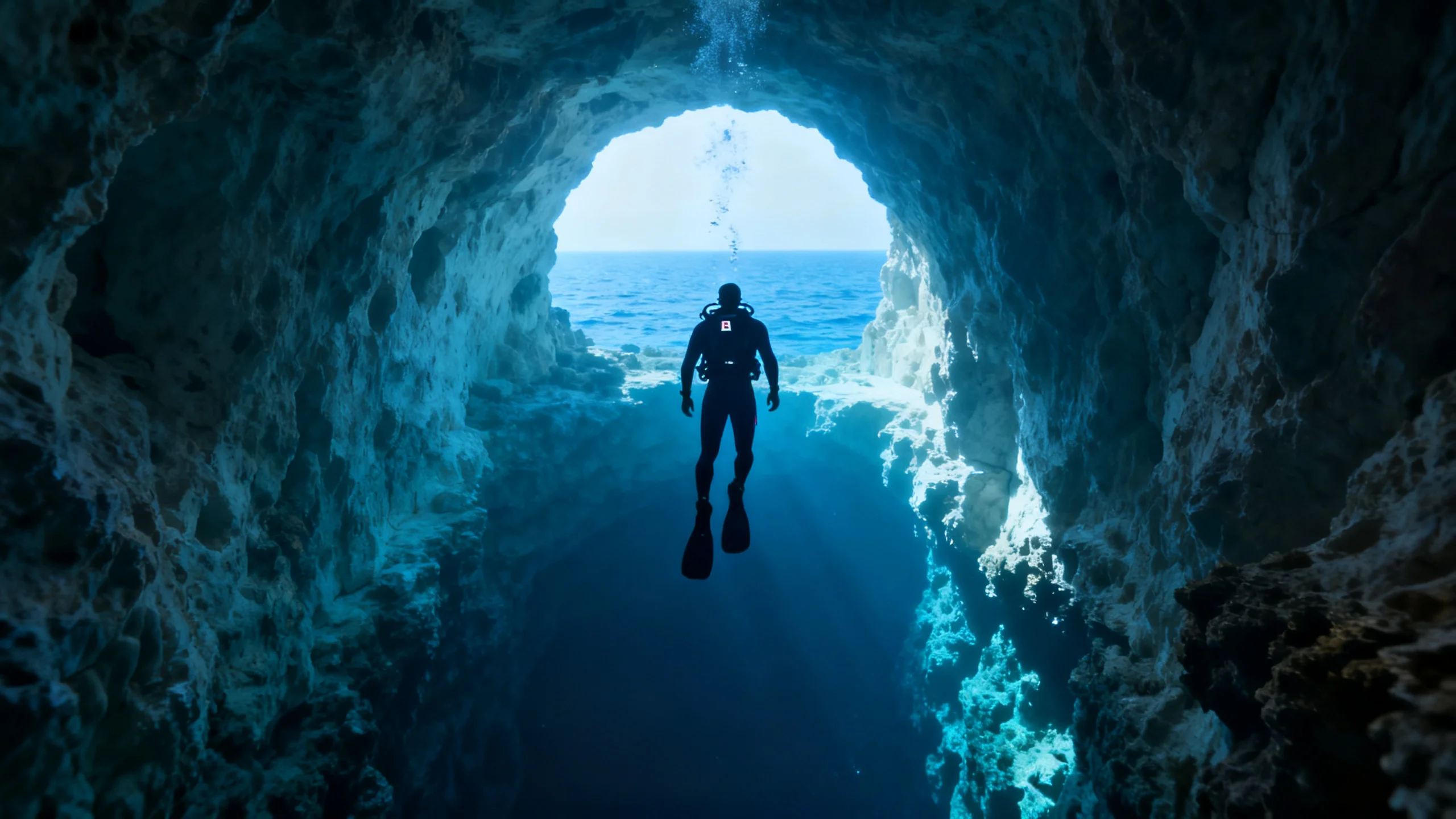
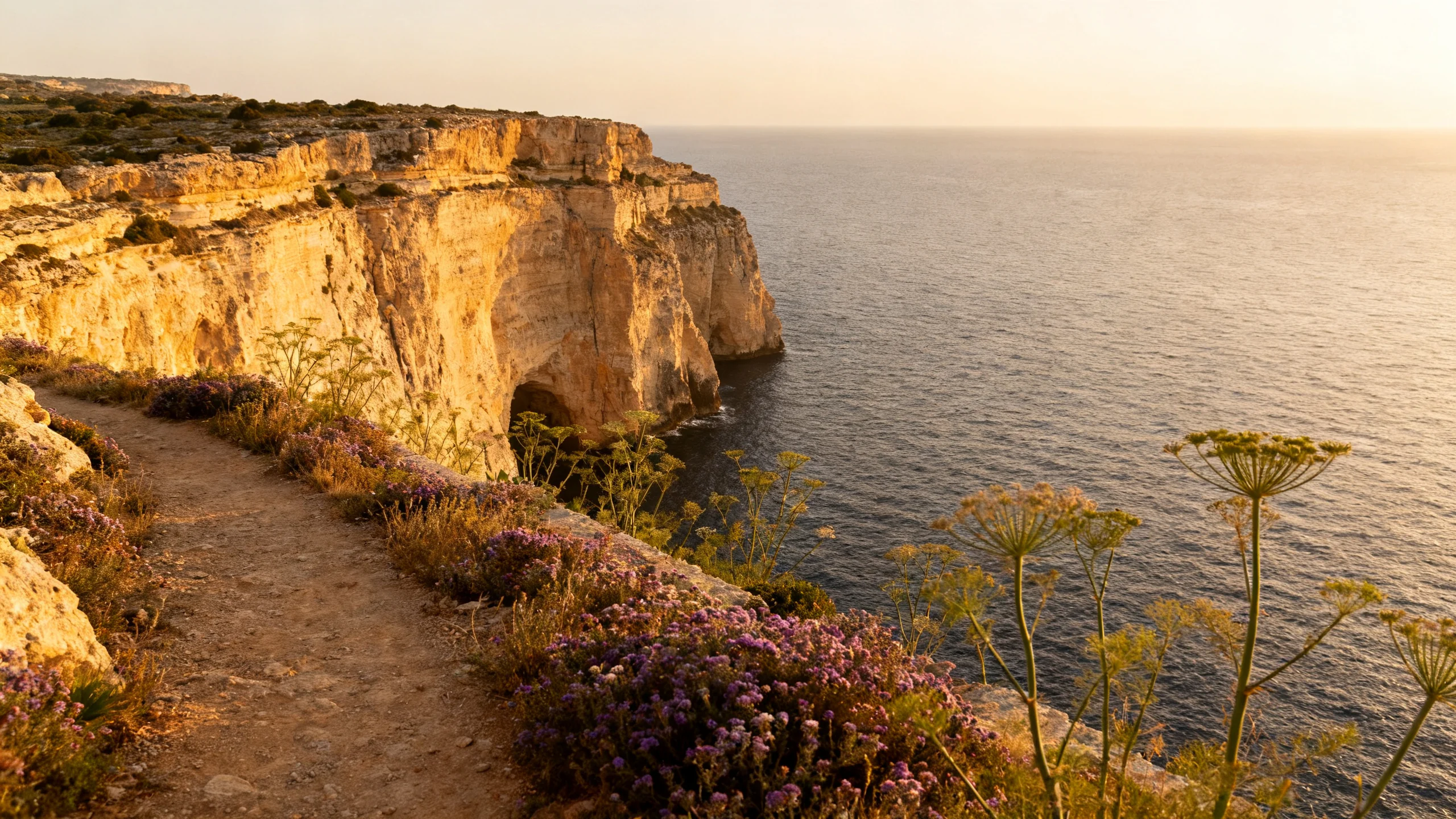
What remains at Dwejra is still worth the visit. Fungus Rock (Il-Ġebla tal-Ġeneral) is the high limestone column standing off the western shore, named after a fungus the Knights believed had medicinal properties (it was actually a parasitic plant, but the Knights guarded the rock anyway). The Inland Sea is a natural shallow lagoon connected to the open Mediterranean by an 80-metre cave-tunnel through the cliffs; small boats run tourists through the tunnel year-round, €4 per person, 25 minutes. The diving here is excellent: the Inland Sea tunnel is one of the most photographed shore-dive sites in the central Mediterranean.
Dwejra Bay itself, where the Azure Window stood, is now an open stretch of limestone shelf with low rock pools. Swim from it in summer (the platform descends gradually into the sea); admire the cliff geology. The visitor numbers have not really dropped post-2017 because the surrounding site is still distinctive, but most people now budget 90 minutes at Dwejra rather than the half-day they would have spent there before.
Ramla and the swimming beaches
Ramla Bay (Ir-Ramla l-Ħamra) is the red-sand beach on the north coast, undeveloped except for two seasonal beach kiosks, fronted by 800 m of sand the colour of brick dust. It is the most natural-feeling beach in the archipelago, with no buildings behind it and a small valley of greenery leading down to the sand. Free, parking €5, busy on summer Sundays but never crowded the way Mellieha Bay is in Malta.
The walk up to Calypso’s Cave at the western end of Ramla takes 15 minutes and offers the best view of the bay. The cave itself (where local legend places Calypso of the Odyssey) is closed for safety reasons, but the platform above it is open.
Other Gozo beaches worth knowing about:
- San Blas Bay is a small, hard-to-reach red-sand cove 20 minutes’ walk down from the road. Wilder than Ramla, almost no facilities. Bring water and shoes for the path.
- Daħlet Qorrot on the east coast is the swimming hole of preference for older Gozitans. Limestone shelf entry, no sand, perfect water clarity.
- Mġarr ix-Xini is a deep narrow inlet in the south, with no sand but excellent swimming and the small Rew Rew restaurant on the slipway (cash only, fresh fish, queue from 12:30).
- Hondoq ir-Rummien is a popular family swimming spot near Qala, with a small sand strip and shallow-shelving water.
Skip Marsalforn Bay as a beach destination; it is more of a resort frontage than a real beach.
Diving
Gozo is the diving destination of choice in the central Mediterranean, with shore access to most major sites (no boat needed) and visibility of 25 to 40 m in summer. The dive schools cluster in Xlendi (south-west) and Marsalforn (north). Most run a structured package: half-day shore dive €60, full day with two dives €110, PADI Open Water certification €440 to €520 over three days.
The headline sites:
- Inland Sea Tunnel at Dwejra (the 80 m cave passage through the cliffs)
- Blue Hole at Dwejra (a 10 m vertical shaft connecting to the open sea)
- Reqqa Point on the north coast (caves, schools of barracuda)
- Mġarr ix-Xini (sheltered, beginner-friendly)
- Xlendi Cave (right outside the resort)
Wreck dives include the Maltese-government-scuttled patrol boat P29 off Cirkewwa (on the Malta side) and the Karwela tug off Xatt l-Aħmar, both accessible from Gozo dive operators.
Getting in and out
The ferry from Cirkewwa in Malta is the only regular link. Crossings every 30 to 45 minutes (less frequent overnight), 25 minutes each way, €4.65 for car + driver return (paid on the Gozo side coming back, not on arrival). Walk-on passenger fare is €4.65 return.
The Valletta-Mgarr fast ferry runs hourly in summer, half-hourly at peak times, 45 minutes, €7.50 one way. Useful if you are based in Valletta without a car.
Within Gozo:
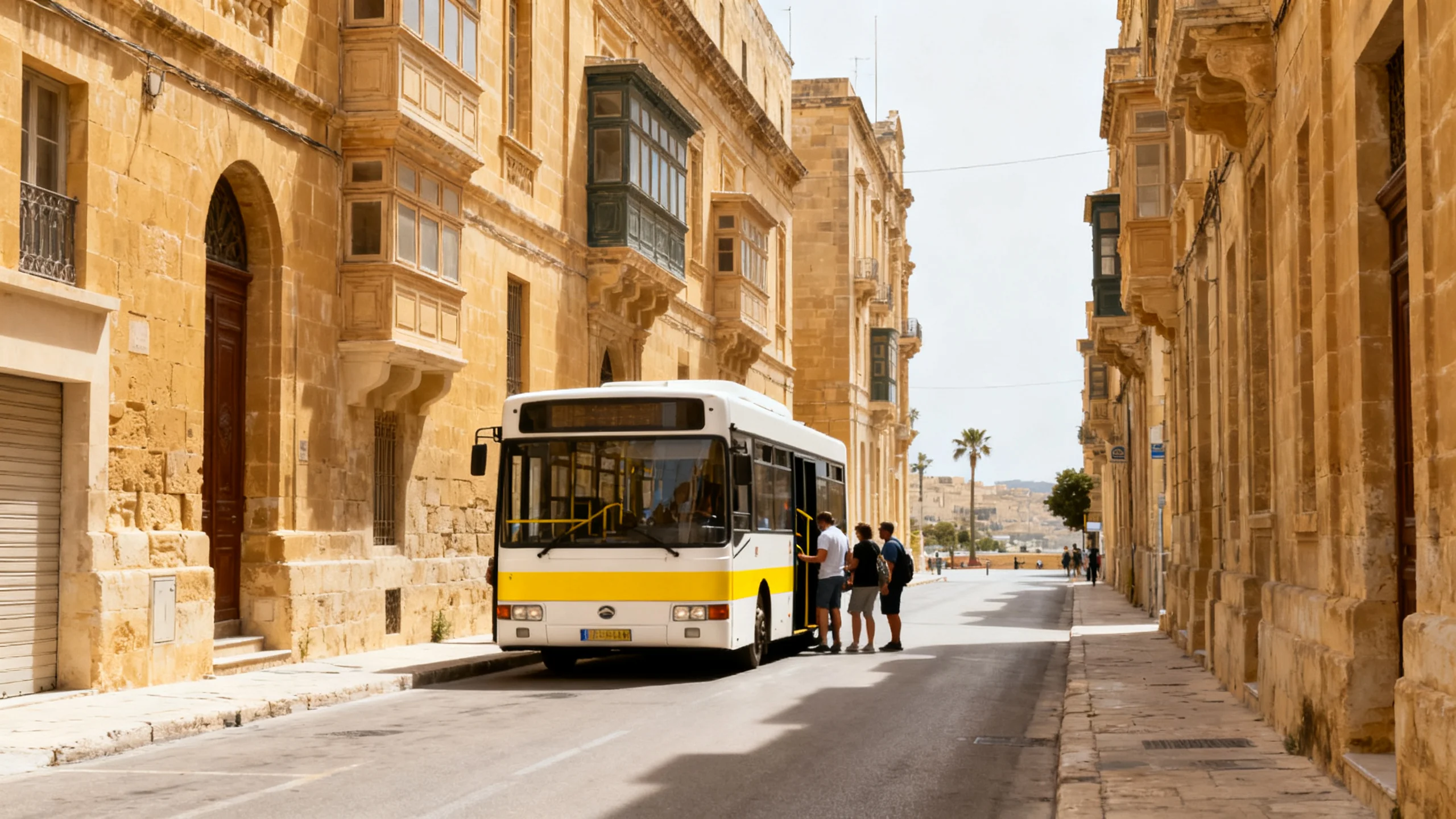
- The bus network is better than Malta’s, smaller scale, fewer overlapping routes, easier to read. A €2.50 day ticket gets you across the island. The Victoria bus station is the central hub, and almost every line passes through.
- A rental car is still the most efficient way to see the inland villages, the coast walks, and the dive sites. €30 to €45 a day in summer, with smaller and easier-to-park cars than on Malta.
- For one or two days, a scooter rental is genuinely usable on Gozo because the roads are quieter and the distances are short. €25 a day from Xlendi or Marsalforn schools.
Where to sleep
Four different bases, four different trips.
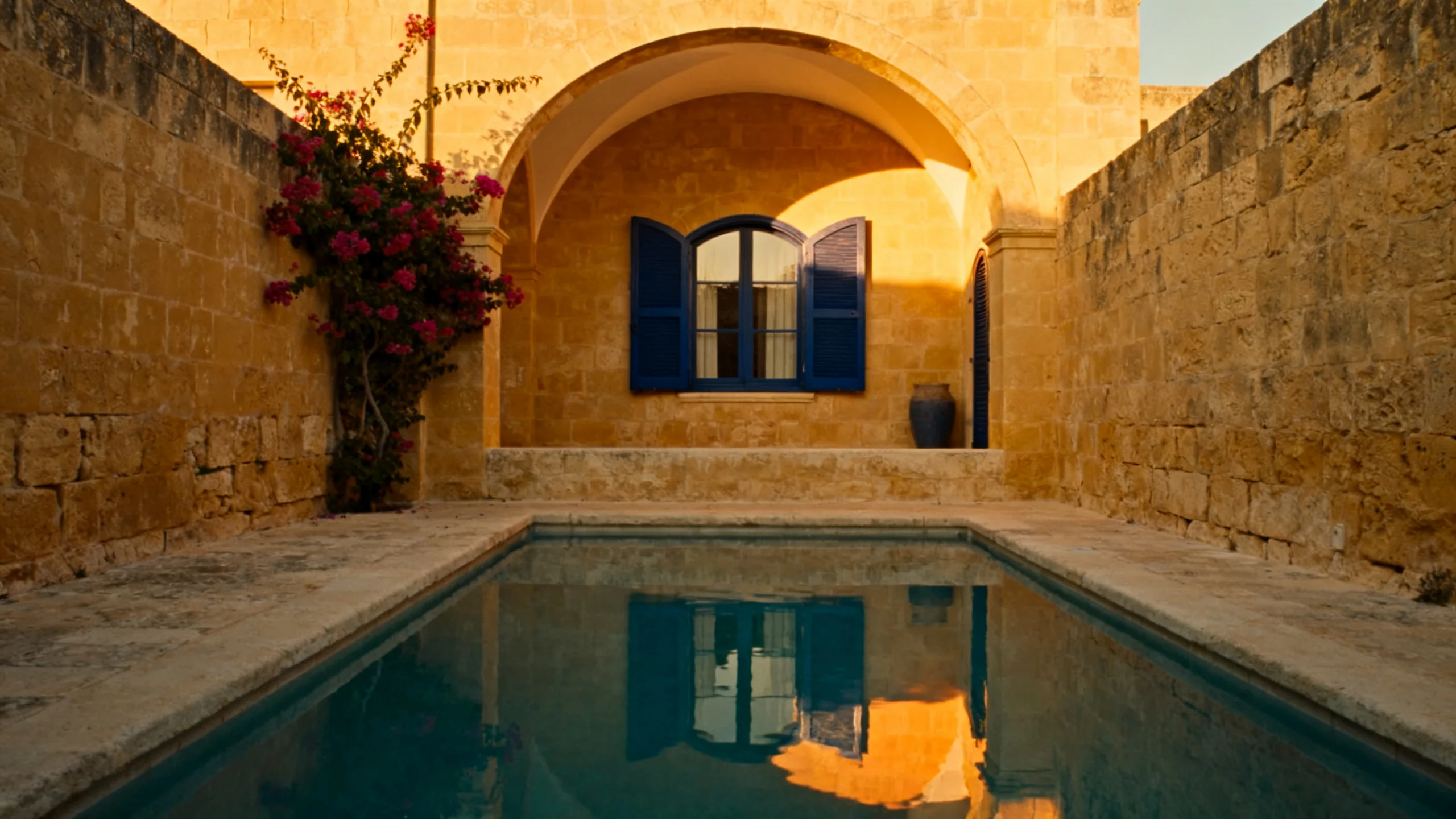
Converted farmhouses are the signature Gozo accommodation. Restored 18th- and 19th-century stone-and-limestone country houses with private pools, courtyard gardens, and traditional features (gallarija balconies, wooden shutters, vaulted ceilings). The cluster is in the inland villages: San Lawrenz, Sannat, Għarb, Munxar. Two-bedroom farmhouses run €140 to €280 a night in shoulder season, €200 to €450 in July–August. This is the choice if you have a car and you want the slow-Gozo experience.
Cittadella boutique conversions in Victoria itself give you a town base inside or near the walls. Four or five properties total. €130 to €220 a night.
Xlendi has the most hotel and apartment stock on the island, ranging from family-run guesthouses (€80 a night) to mid-market resort hotels (€180). Walkable to restaurants, dive schools, the small swimming beach.
Marsalforn is the alternative resort: more apartments, slightly less character than Xlendi, larger summer crowd.
Detailed picks on the where-to-stay page for this region.
How long to stay
This is the section travellers most often get wrong. The standard pattern is 1 day from Malta. The right pattern, for a week-long trip, is 3 nights on Gozo.
- One day trip sees the Cittadella in 90 minutes, a quick stop at Ġgantija, lunch in Xagħra, Dwejra at 16:00, the ferry back at 18:00. You come away thinking Gozo was nice. You missed most of it.
- Two nights lets you do the Cittadella, Ġgantija, Dwejra, Ramla Bay, and one dive or coastal walk. You see the main sites unhurriedly.
- Three nights adds a second beach, a second coast walk, two evenings to actually experience village pace, and a daytrip to Comino on the small ferry from Mġarr. This is the recommended floor for travellers who care about the island.
- Four to five nights is for divers, slow travellers, and anyone basing themselves in a farmhouse with a pool for relaxed days.
If your full Malta-and-Gozo trip is 5 days, give Gozo 2 nights. If it is 7 days, give Gozo 3. If it is 10 days, give Gozo 4. The conventional wisdom (a quick day from Malta) shortchanges the better half of the trip.
The honest paragraph
Gozo rewards patience the way Malta rewards efficiency. The places to see are not a list to tick off in a morning; they are a small landscape to settle into over a few days. The Azure Window is gone, but Dwejra is still worth a sunset. Ġgantija is older than anything else in Europe most travellers have ever seen. The farmhouse-with-a-pool stay is the most distinctive accommodation in the country. Most importantly, this is the part of the trip you remember six months later. Plan accordingly.